America from the Saddle: The Good, the Bad, and the Beautiful
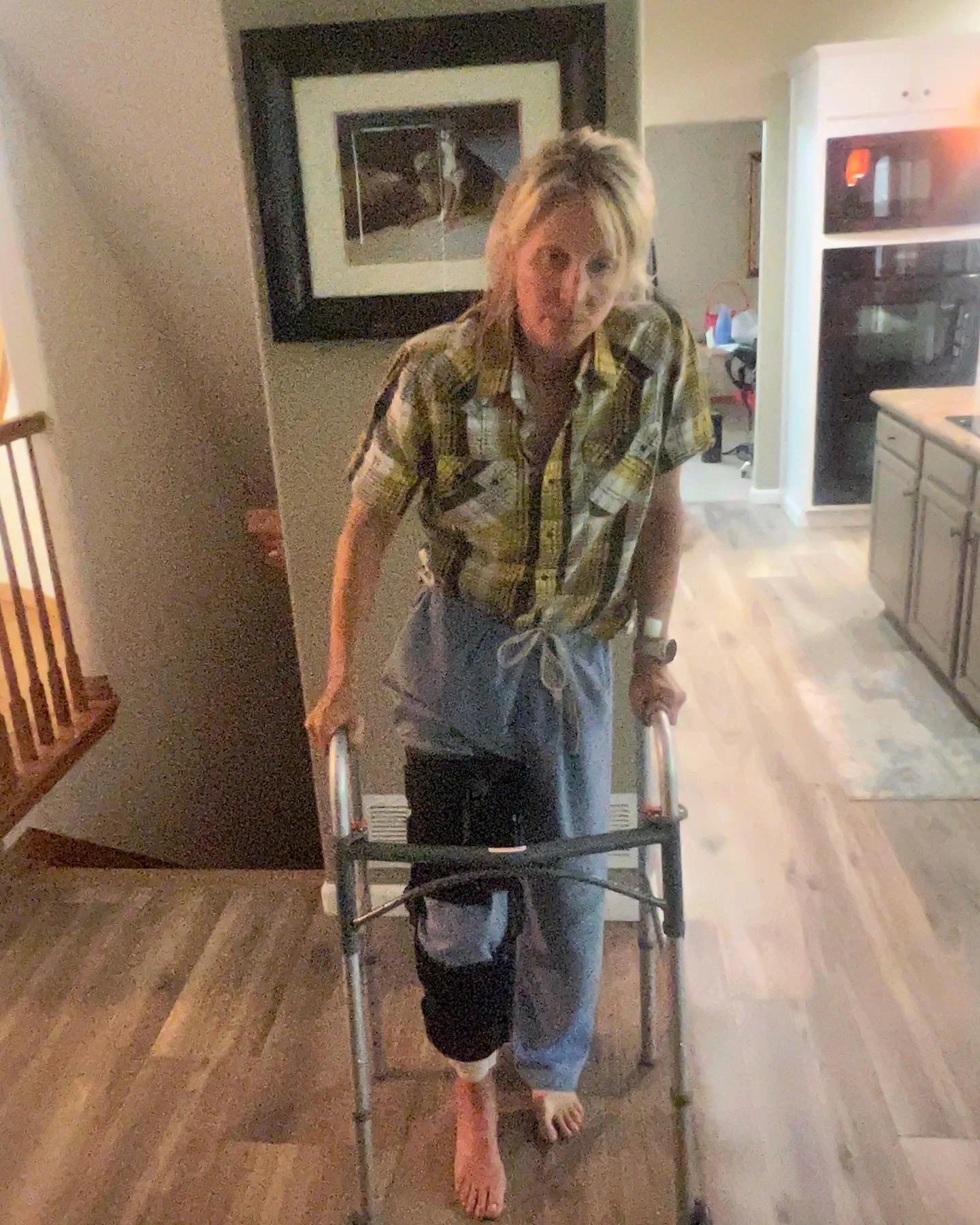
June 2022, post-motorist v bike collision, post Right Shoulder and Right knee surgery, surgical scars, in pain, on pain meds, when the world felt dark, I felt hopeless, and the path back to good health felt endless…
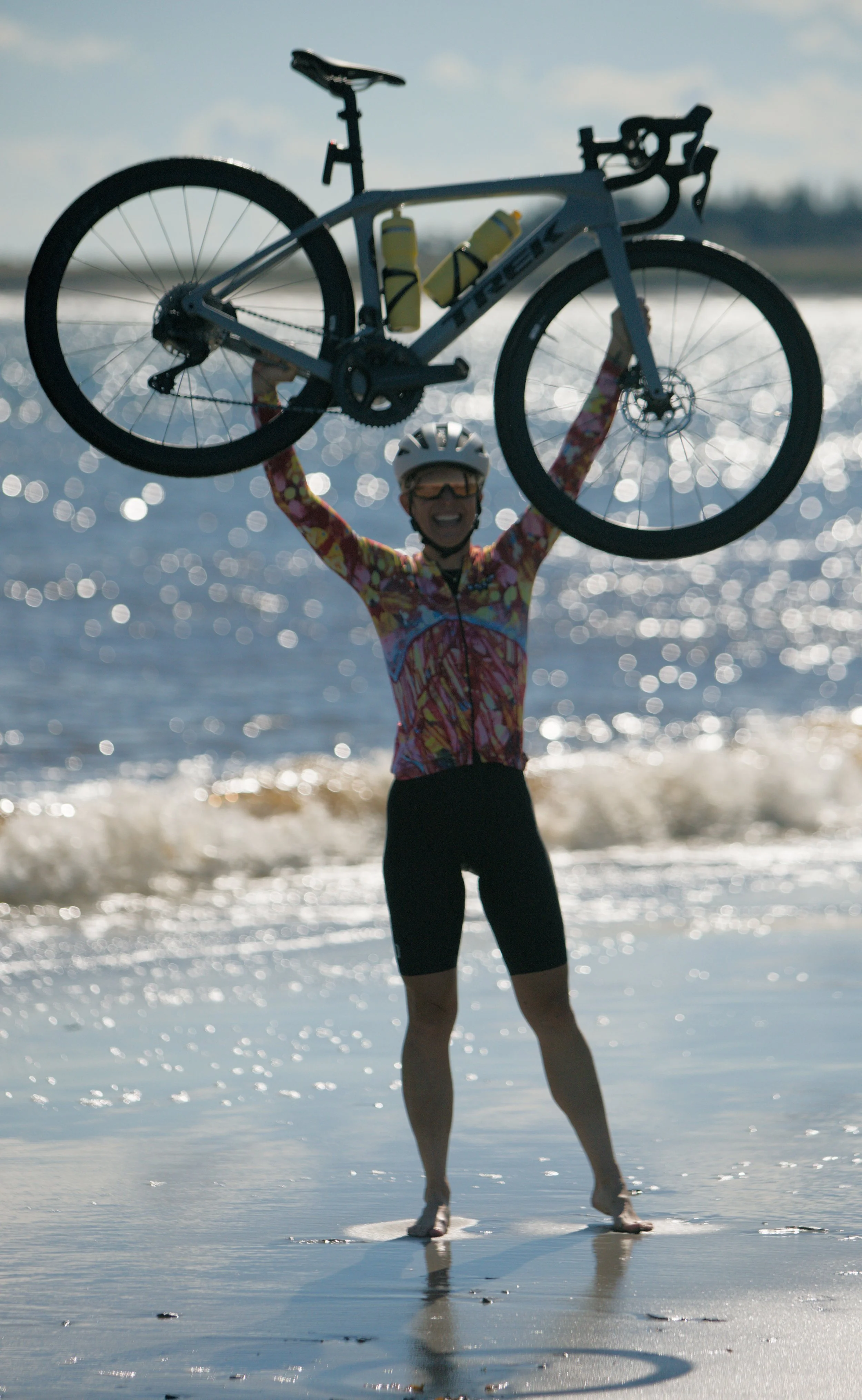
October 2026, arriving at the Atlantic Ocean after pedaling across much of the USA! Photo Credit: Anthony Farenwald
One bicycle, 15 states, two suitcases, and a whole lot of perspective.
There are some experiences that are difficult to explain to someone who wasn’t there. Riding a bicycle across the United States is probably one of them.
I set out to ride across America with Trek Travel, beginning in Astoria, Oregon, and ultimately finishing in Portland, Maine. The overall journey covered approximately 3,700 miles and 15 states. My ride wasn’t quite a continuous coast-to-coast line, though. I had to step away for two weeks, leaving the group in Columbus, Wyoming, and returning home before rejoining everyone in Madison, Wisconsin. From there, I picked up the journey again and rode with the group to Maine.
So while I didn’t ride every mile of the continuous route, I was fortunate to experience the vast majority of this extraordinary adventure and, most importantly, finish alongside the group in Maine.
Over the course of those weeks, I experienced a whole lot of America from the saddle of my bike: countless small towns, big cities, back roads, highways, bike paths, mountain passes, and more than a few questionable weather days.
I had some favorite places, some less-than-favorite days, some wonderful conversations, a few surprises, and plenty of time to think. I also got to experience the country alongside a group of people from different backgrounds and, as it turns out, different countries. That added a perspective I hadn’t anticipated.
Now that I’ve had a little time to let the experience settle, I wanted to share some of the things that stood out to me — the good, the challenging, and the beautiful.
America, from the saddle
One of the great privileges of riding across the country is the sheer variety of landscapes you get to experience. You don’t just fly over a place or drive through it at 75 miles an hour. You move through it, one pedal stroke at a time.
Our route took us east from Astoria, Oregon, through a remarkable variety of landscapes and communities before eventually reaching the Atlantic. There were dramatic river gorges, waterfalls, golden wheat fields, ranchland, small agricultural towns, rolling hills, lakes, forests, mountains, and eventually the beautiful fall colors of the Northeast.
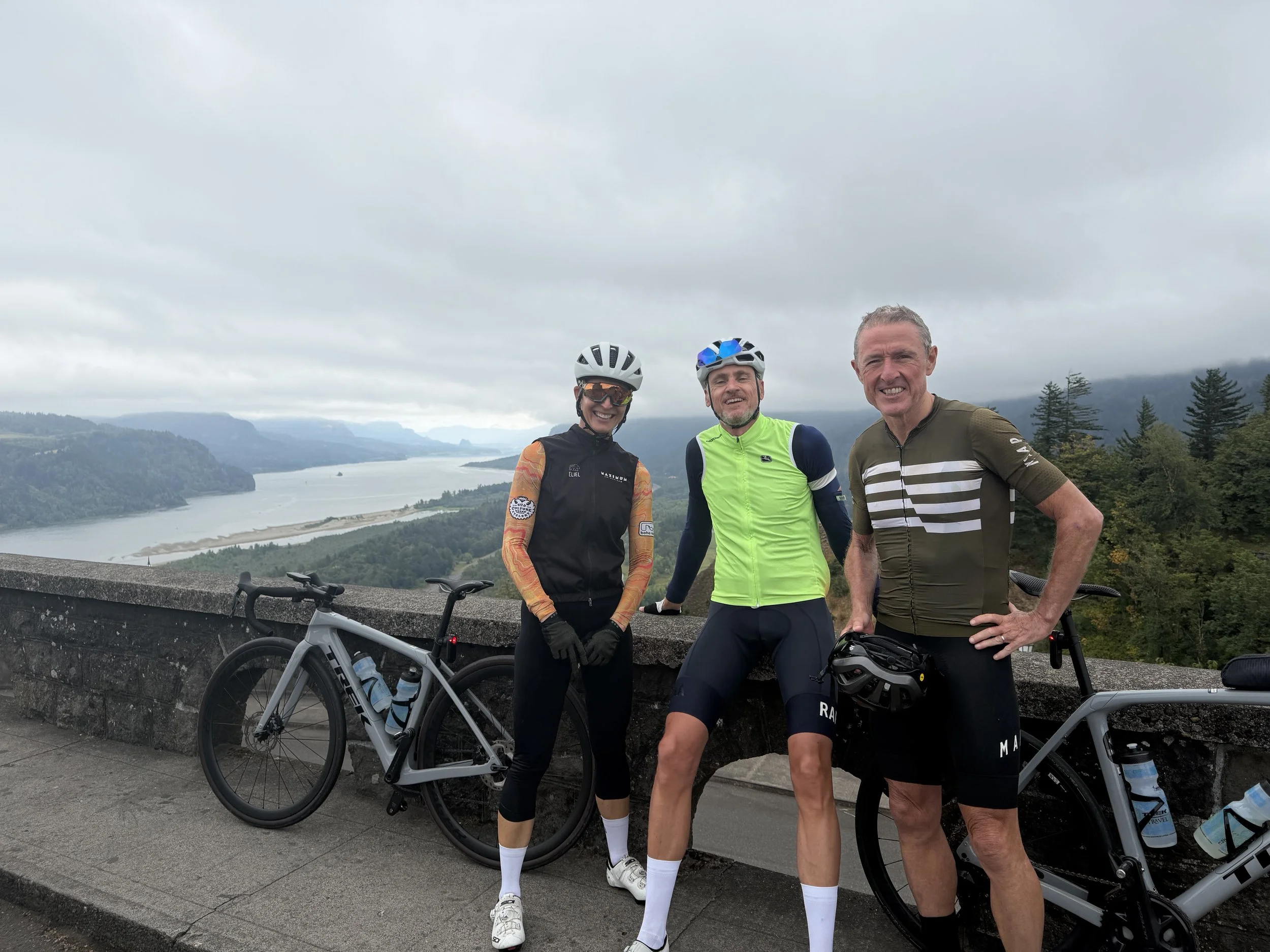
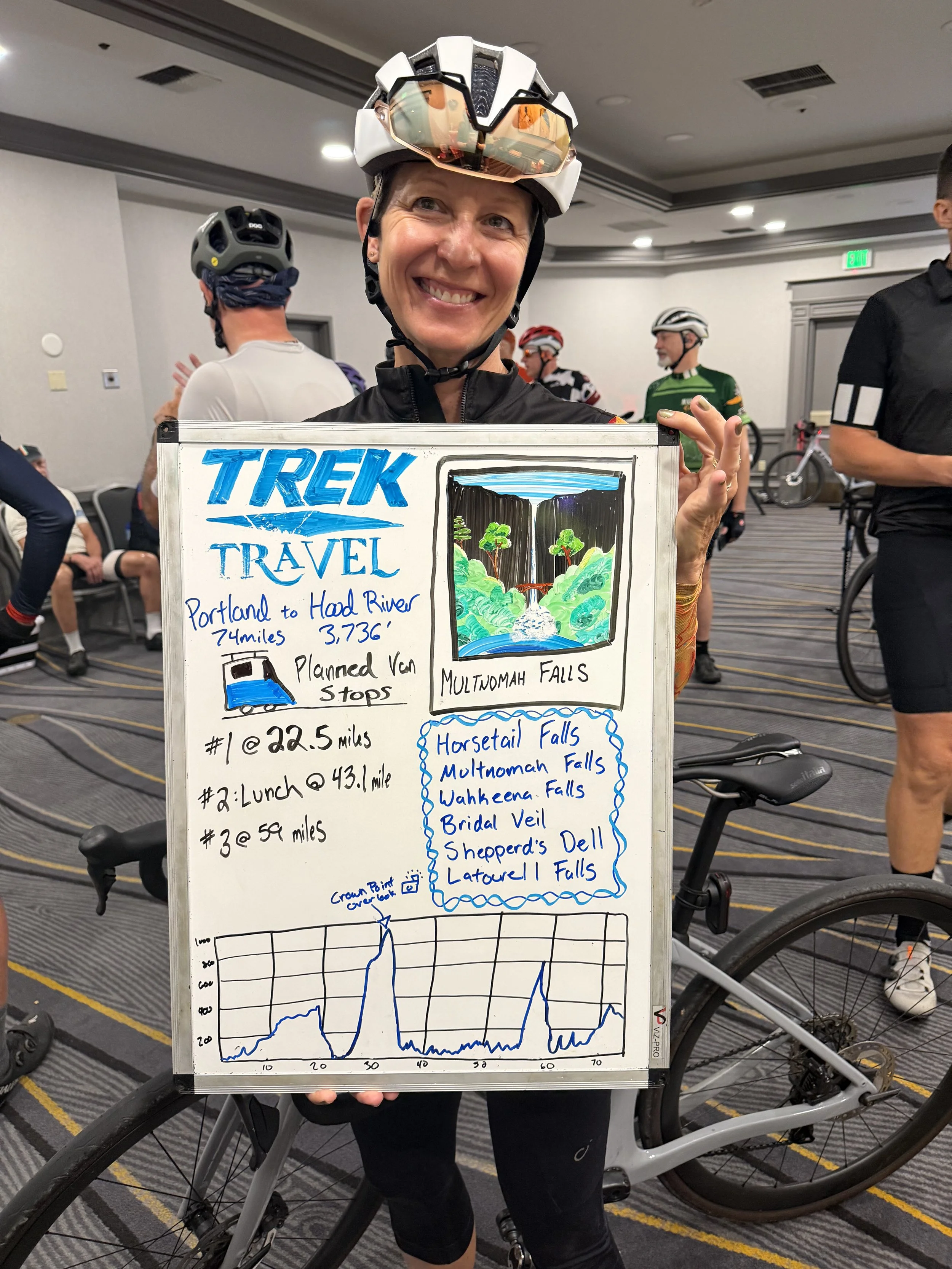
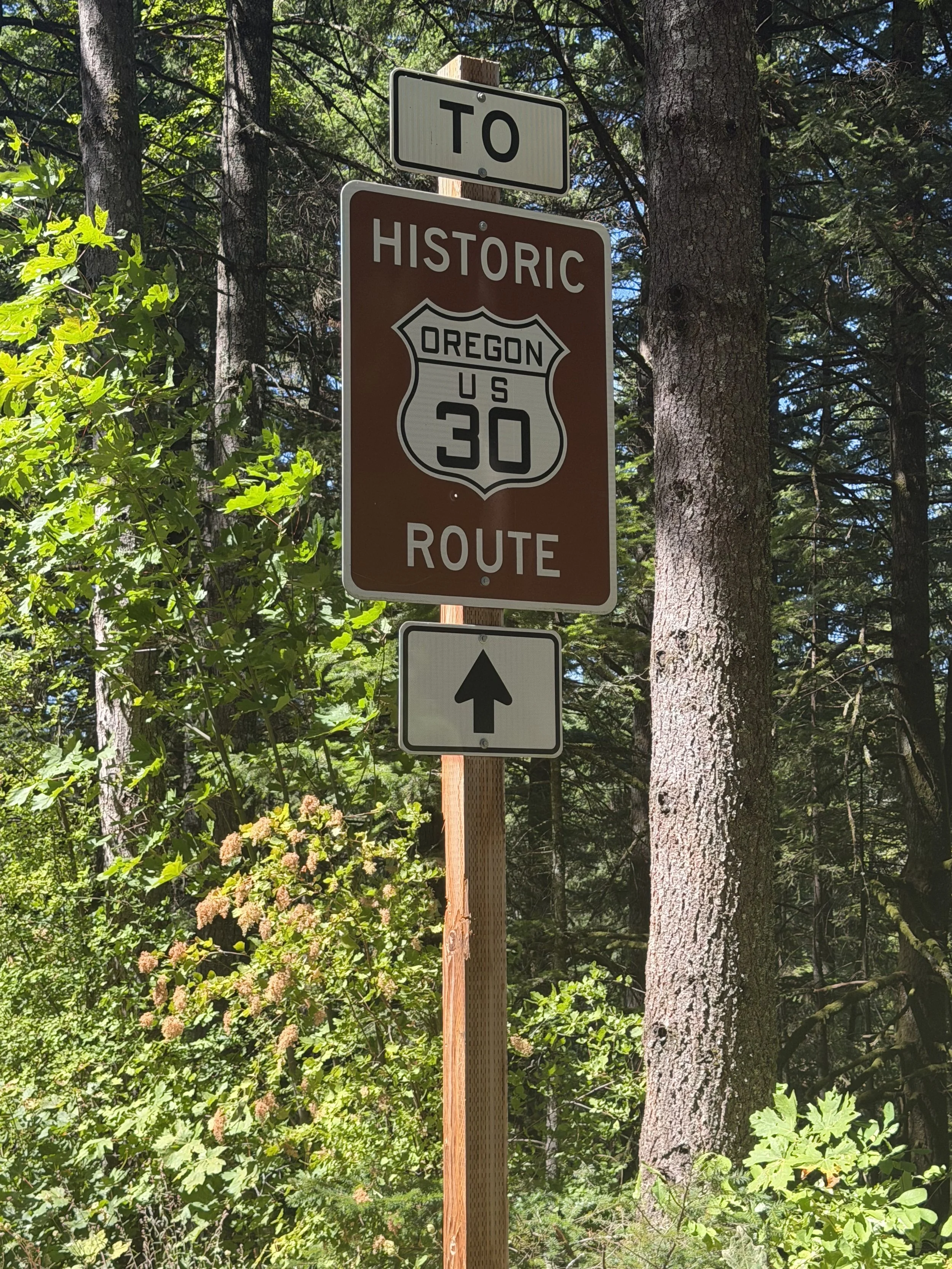
Some of the riding that stands out most vividly for me was in the Columbia River Gorge, including the historic Columbia River Highway. Eastern Oregon offered a completely different kind of beauty — wide-open spaces, golden fields, and a sense of vastness that is hard to appreciate until you’re out there riding through it. It was wild to experience the shift from moist green western Oregon to dry and arid eastern Oregon, in real time.
Walla Walla, Washington, and Hood River, Oregon, were both places I found myself wanting to spend more time. Traveling through Wisconsin was another highlight, with a memorable ferry ride departing from Milwaukee and crossing Lake Michigan; the state wowed us with its beautiful rolling terrain and unexpected charm. I personally think the absolute friendliest people we encountered on the trip were in Wisconsin. Here we also got to take part in a private tour of Trek HQ in Waterloo and enjoy dinner at the Trek Ranch, such a treat!
Beyond Wisconsin I’ll be honest — Ohio really impressed. I had no idea! Lakes and greenery, fantastic bike paths! Oberlin College was a highlight also, being the first college to admit women and grant them full bachelor’s degrees, as far back as 1837. Here, I stumbled into the cutest Vintage shop ever (more details below in the daily recap). We briefly passed through PA in Meadville and Bradford (see below, one of the most memorable meals for me was in Bradford, this tiny little town!), before we crossed into NY state.
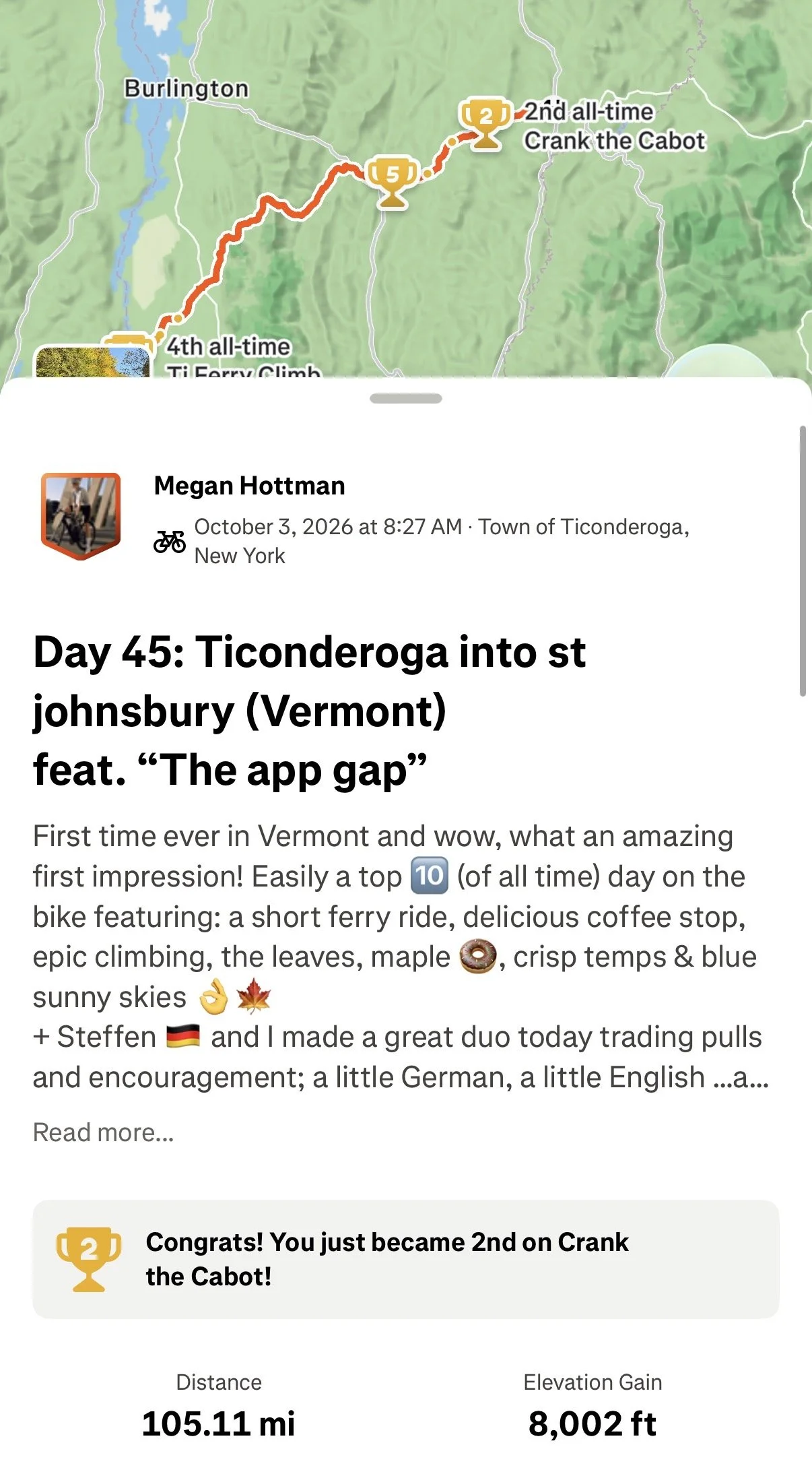
Further east, the Finger Lakes region of New York, Cazenovia, the Adirondacks, and the Green and White Mountains offered another entirely different landscape. I loved the time around Lake Cazenovia and our stay at the Brewster Inn. The ferry crossing at Ticonderoga across Lake Champlain was quaint and charming. We rode through several college towns including Newbury and also Cornell (right as the massive fraternity story was breaking, as it turned out). There was the “app gap” day with immense vertical gain (8143ft!) amidst fall festivals and “leaf peeping” traffic in the small towns along the way, on the weekend; I tried something new: maple donuts- yum!
And then there was Vermont, New Hampshire, and Maine, where the fall foliage made a spectacular appearance in these new-to-me states. Riding through the Northeast in autumn was a pretty wonderful way to finish a cross-country adventure. And I tried my first ever lobster roll in North Conway- amazing.
There were plenty of other memorable sights along the way, too: Amish country and horse-drawn carriages, SO MANY quaint small-town downtowns, (literally every main downtown street being called “main street!”), historic buildings, roadside stops, and all the little things you notice when you’re moving slowly enough to actually see them. Some little towns thriving, some barely surviving, some spots on the map with just a Subway and a Dollar Store. Farmers out harvesting. And mile after mile of amber waves of grain (and soybeans). Sooo many acres of farmland. 🚜
It’s hard to choose a favorite because the variety was really the point. One day you could be riding through open farmland, the next through a college town, and the next climbing through mountains.
I came away with a much better appreciation for just how geographically and culturally diverse this country is.
(For a more detailed day-by-day, scroll down to the bottom where I share each day’s Strava post and photos as well as the TT “highlights of the day.”
Could I live here?
One of the little games I played throughout the trip was asking myself, Could I live here?
Of course, this was hardly a scientific assessment. In many places, we were there for less than 24 hours. We’d arrive at a hotel around 3 p.m., spend the evening eating and recovering, and be back on our bikes around 8 the next morning. I didn’t exactly have time to explore neighborhoods, meet residents, or get a real feel for daily life.
Still, I enjoyed taking a quick temperature check of each place and imagining what it might be like to call it home. I paid attention to the energy most of all.
Two places rose to the top of my list: Missoula, Montana, and Madison, Wisconsin. We had rest days in both, which gave me a little more time to experience them beyond the hotel and the route.
They’re very different places, but they share a few things I found appealing: a college-town atmosphere, a diversity of people and places, friendly communities, and plenty of outdoor recreation.
Missoula had that mountain-college-town feel I love, with outdoor opportunities everywhere and an elevation that is a little easier to manage than much of Colorado. Madison appealed to me for different reasons. It’s a state capital and a college town, surrounded by water, with excellent cycling infrastructure and lots of opportunities to get outside. The cycling culture there was particularly appealing.
I also found myself wanting to revisit Walla Walla and Hood River. Both seemed to have a lot going for them.
I’m a West Coast girl at heart, and I generally felt more at home in places west of the Mississippi. That doesn’t mean I didn’t enjoy the eastern part of the country. I loved Vermont, New York, and Maine, and I would happily spend more time exploring them. I just noticed that my personal sense of belonging shifted as we traveled farther east.
One thing I noticed in nearly every city, regardless of size or location, was some version of a housing crisis and an unhoused population. The severity varied, but it was present in places that otherwise seemed very different from one another.
I also had an interesting conversation at the Portland, Maine, airport with a couple who had retired from California and were traveling around the country, visiting different cities as they tried to decide where to settle. They were looking for a place with low taxes, a clean and safe city, a reasonable cost of living, and outdoor recreation right at their doorstep.
I had to chuckle to myself. Isn’t that what everyone wants?
But it got me thinking about how complicated the question of where to live really is. There is no perfect place. There are tradeoffs everywhere, and what matters most to one person may be relatively unimportant to another. In fact maybe it’s not complicated, it more that we need to see it through the lens of experiment, rather than the pressurized “must find the perfect place” outlook.
Everywhere has its pros and cons, and given my somewhat nomad-popping-around-in-a-van life, I like to say that home isn’t a place, it’s a feeling (and it’s wherever my dogs are!).
Proximity to family, access to an airport, a lively cycling community, good schools or academia, affordable housing, mountains, ocean, climate, and recreation opportunities — the list goes on. And increasingly, there are other considerations, too: water availability, wildfire risk, flooding, climate change, and the rising cost or even availability of home insurance. For me personally, bikeability/walkability where I live is the top factor. My happiness directly correlates to how much of my life I can do by bike.
*And that raises another fun /unrelated bonus of this trip: for the entire time, none of us drove! Sure we rode in the vans a few times to dinners that were a distance from the hotel, but otherwise, we rode bikes point to point each day. (After being on a bike that long, once I did get back into my car it felt like a space ship!).
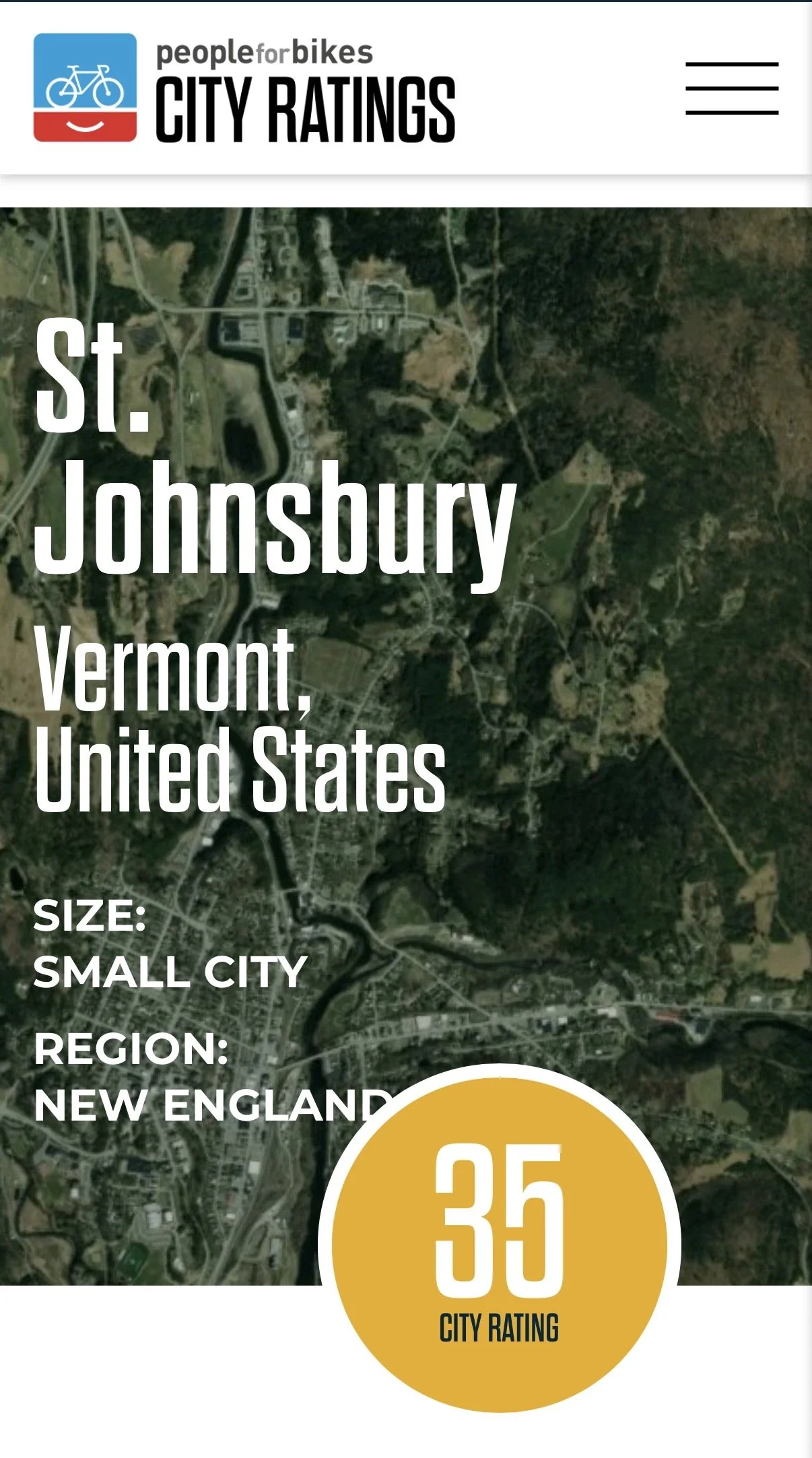
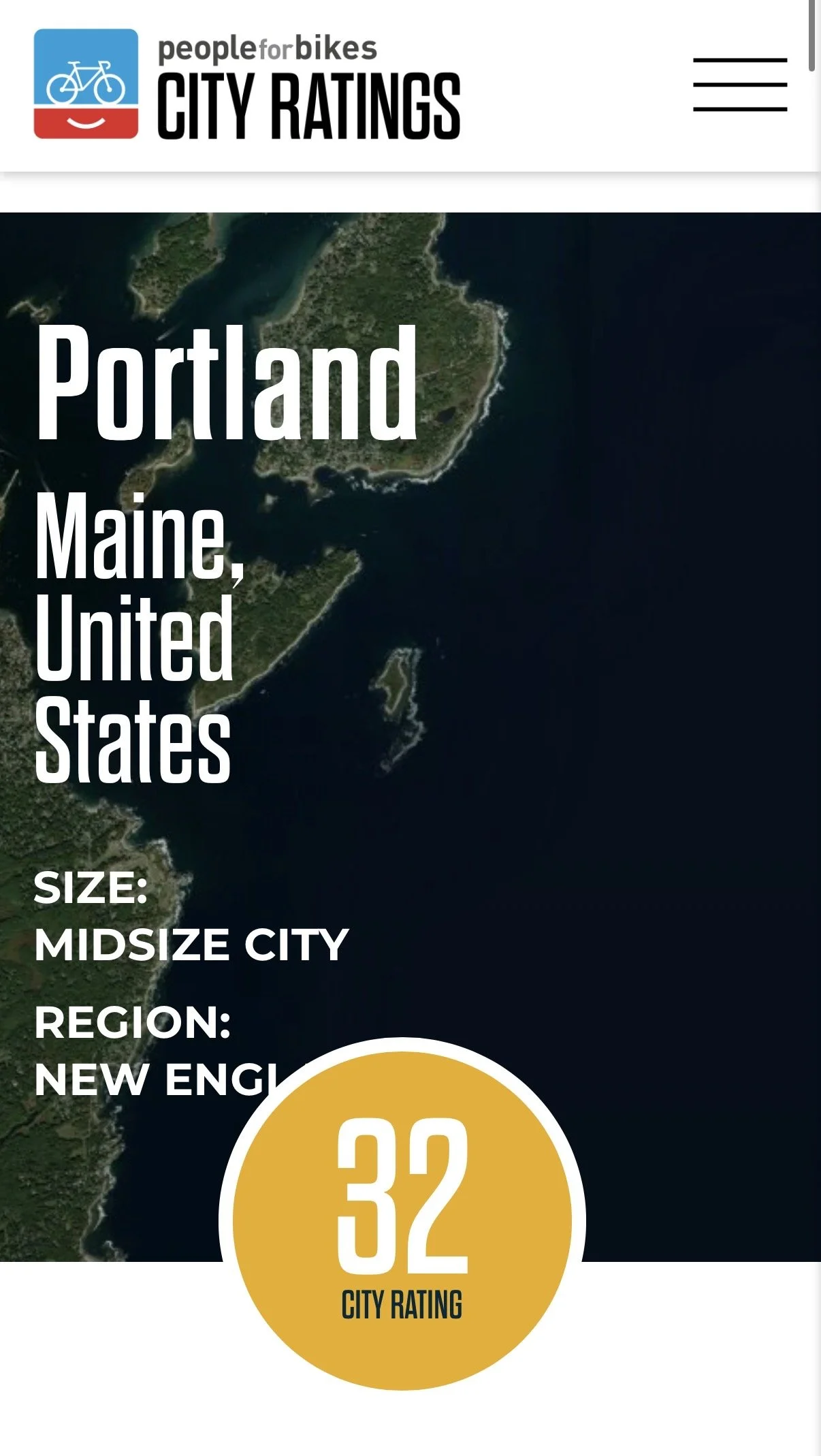
One of the many PFB City Ratings scores I researched along the way. It was fun to experience the score in real time, noticing bike paths (or not), shoulders or bike lanes (or not) and the bikeability of the place as we rode through it.
I found myself thinking that it would be fun to live somewhere new every three or four years. Long enough to settle in, make a home, build community, and get to know a place — and then move somewhere else and try something new.
In a perfect world, this trip would have been twice as long so we could have spent more time exploring the places we passed through. But that’s the nature of a trip like this. You get a taste, you make some observations, and sometimes you leave wanting more.
**An additional factor I researched along the way was PeopleForBike’s CITY RATING in each town. While some of the small towns didn’t (yet) have a rating, most of the places we rode through, DID. Montana was the clear winner as the state with the most highly-rated cities on the trip (as far as the ones we visited anyway), with Bozeman, Helena, Missoula all ranked in the 50s! (I include some of the ratings down below in my day-by-day replay section).
The kindness of strangers — and a little faith restored
One of the things I appreciated most about this trip was how kind and welcoming people were along the way.
In small towns and big cities, downtown and on the outskirts, at chain hotels and independent inns, in coffee shops and restaurants, and even in the occasional Uber ride, I encountered people who were genuinely curious, friendly, and generous.
People wanted to know where we were going, where we’d come from, how far we were riding, and what it was like to travel across the country on a bicycle. They were often amazed by the undertaking and seemed genuinely interested in hearing about it.
There were so many little conversations that I probably won’t remember individually, but collectively they left an impression: humans are still inherently good. People are still generally nice and kind.
It’s easy to spend too much time consuming the news and scrolling through social media, where the loudest, most divisive, and most outrageous voices tend to get the most attention. It can create the impression that we’re all at one another’s throats.
But that’s not what I experienced on the ground.
Most people were busy living their lives, doing their jobs, raising their families, and going about their days. They were curious about us, interested in what we were doing, and generally kind. We had some wonderful conversations with people who had no reason to go out of their way for a group of cyclists passing through town, but who did anyway.
It was a nice reminder that the world is often a whole lot friendlier when you’re actually out in it, talking to people face-to-face. As someone said on IG, “if you want to see the worst in people, scroll social media. If you want to see the best, ride your bike across the country.”
Seeing America through someone else’s eyes
Another unexpected pleasure of this trip was having several international riders along for the adventure.
We had four Brits from Manchester, a woman from Sydney, Australia, a guy from Bogotá, Colombia, a guy from Aberdeen, Scotland, and my team-c riding mate Steffen (a civil engineer) from Leipzig, Germany. (Notable for me is that Manchester, Melbourne, and Cali Columbia re all 3 places I’ve visited thanks to racing World Cups on the velodrome back in the day, so I had some generic context to reference for their home cities, thanks to bikes!). Having people from other countries riding alongside us added an entirely different layer to the experience.
They were curious about America, and they weren’t shy about asking questions. Sometimes those questions were funny, sometimes thought-provoking, and occasionally they left me feeling a little sheepish about how little I actually knew about certain things.
I’ll admit, there were moments when it felt a bit like the Defend America Tour. There were observations and criticisms about things happening in our country, and I occasionally found myself wanting to explain or defend the American way of doing things. After all, they’d chosen to come here and ride across our country!
But I also understood many of their questions and frustrations, and I genuinely enjoyed the conversations. It was fascinating to compare how things work here with how they work in their home countries.
One of the biggest areas of bewilderment was, unsurprisingly, our relationship with guns. Several of them simply could not wrap their heads around the fact that someone can walk into a store like cabella’s and purchase a firearm. In their home countries, that kind of access and widespread gun ownership is almost unimaginable. What feels relatively ordinary to many Americans was completely foreign to them.
There were other observations, too. Restaurant portion sizes. The amount of food we waste in restaurants. The number of overweight people they noticed compared with what they see at home (that one was particularly rich, given that the guy who said it owned a McDonald’s franchise in his country)... Housing sizes and prices. Questions about our government structure and some of the things unfolding in American politics (which of course is an area I shared their concerns). **One commonality among us was that none of us wanted the current administration in the US to be in charge much longer. Globally, and for me here at home, we were all united in our desire for something better, kinder, more professional and more diplomatic, ASAP. I was stunned to learn from one of them that in order to get her visa to travel to the US for this trip, she had to agree to give all of her social media account passwords before being approved. Insane!
Things that we as Americans may have grown accustomed to, or perhaps stopped noticing, were suddenly being held up for a closer look.
And that was part of the fun. I found myself looking at familiar things through their eyes and noticing them in a way I might not have otherwise. It also gave me a chance to share my home country with people who were genuinely interested in seeing it, understanding it, and experiencing it.
I loved that. I loved answering their questions, hearing their perspectives, and occasionally learning something myself. I learned some new words in German, I learned ways that we in the USA differ in word choice from the UK or Aus, even though we’re all speaking english. Just phrases or norms, it was fun to compare and contrast.
In some ways, it felt like getting to be a tour guide for my own country. I’ve spent over 2 decades riding my bike around Colorado, Arizona, and parts of the West, as well as in the midwest where I found cycling, but crossing the country with people from all over the world gave me a much bigger view of America — not just its landscapes, but its habits, contradictions, quirks, and culture.
It was a reminder that sometimes you don’t need to travel somewhere new to see something differently. Sometimes you just need to bring along someone who is seeing it for the very first time.
A surprising experience on the road
As someone who has spent much of my professional life working with cyclists who have been hit by motorists, I paid close attention to our experience on the roads.
I’ve been hit by motorists myself, including incidents in 2019 and 2022, and I’ve represented more than 200 cyclists injured or killed in collisions with motor vehicles. Road safety is not an abstract issue for me. It’s personal, professional, and something I think about every time I get on my bike.
So what happened — or, more accurately, what didn’t happen — on this trip was pretty remarkable.
We had a group of approximately 29 riders including 24 guests and five guides, and 3 support vehicles. The overall route covered roughly 3,700 miles, and we traveled through all sorts of road environments: quiet rural roads, busy highways, small towns, city streets, bike paths and everything in between.
And our group made it across the country without a motorist-related incident that resulted in a collision or came close to one.
That isn’t to say every interaction was wonderful. There were a few close passes and a few middle-finger salutes, particularly in areas where anti-cyclist sentiment seemed more pronounced. But considering the miles covered and the number of riders involved, the overall experience was remarkably positive.
I suspect our group size and the presence of support vans helped. Thirty cyclists traveling together are hard to miss. Perhaps there was also something about seeing a large group of people working their way across the country — riding in wind, rain, and challenging conditions — that encouraged a little more patience and consideration from passing motorists. No question we were a spectacle out there.
Whatever the reasons, I found the experience uplifting. ENCOURAGING.
After so many years of seeing the worst outcomes of motorist-cyclist interactions, it was wonderful to experience a long stretch of road travel without a serious incident. It didn’t erase the reality of the dangers cyclists face, and it certainly doesn’t mean we can let our guard down. But it did give me a little more optimism.
Sometimes a positive experience is exactly what you need to keep doing the work.
America in 2026: A few things I noticed
There was another layer to traveling across the country in 2026, a year when America is marking its 250th anniversary and navigating another contentious election cycle.
We saw campaign signs and political messaging in towns all across the route. But one of the more interesting things I noticed was the number of signs opposing data centers.
I saw them in places with very different political leanings. It wasn’t something I expected to notice so consistently, and it made me curious about the conversations happening in those communities.
Questions about development, land use, water, energy, outside interests, local resources, ICE, immigration, home prices, and quality of life don’t necessarily fit neatly into the political categories we often use to describe people and places.
I don’t pretend to know the specifics of every community’s concerns, but seeing those signs in so many different places made me think about how much people may have in common, even when they disagree about plenty of other things.
Every community is trying to figure out how to grow, how to preserve what makes it special, how to provide for its residents, and how to navigate the challenges ahead. The details may differ, but those questions are everywhere.
And that, too, was part of the education of traveling across the country: getting a glimpse of the issues and priorities that matter to people who live in places very different from my own. Often I’d think to myself - why do people live here? This little tiny town or blip on the map, what drew them here and why did they stay? How is this place staying afloat, why are dollar general stores so prolific, and how is gas so expensive literally everywhere (the cheapest I saw on the entire trip was $4.30/ gal for regular)…
I digress. As you can see the trip offered many “thought experiments” for me.
One homework assignment a day
One of my favorite aspects of the trip had very little to do with the scenery: It was the simplicity of the daily routine.
Wake up. Eat breakfast. Have coffee. Get dressed in cycling kit. Get on the bike. Follow the route. Ride for five or six hours. Arrive at the next destination. Shower. Wash cycling clothes in the sink or shower. Hang everything up to dry. Eat dinner. Wind down. Go to bed. Repeat.
That was pretty much it.
I had one homework assignment each day: get from Point A to Point B on my bicycle.
There were very few decisions to make and very few competing obligations. No errands, no household projects, no appointments, no emails demanding immediate attention, no trying to squeeze five other things into the day. I didn’t need to figure out what I was going to wear, what I was going to cook, or what else I should be doing.
I just needed to ride safely, take care of myself, eat enough, and get enough rest to do it again the next day.
I loved that.
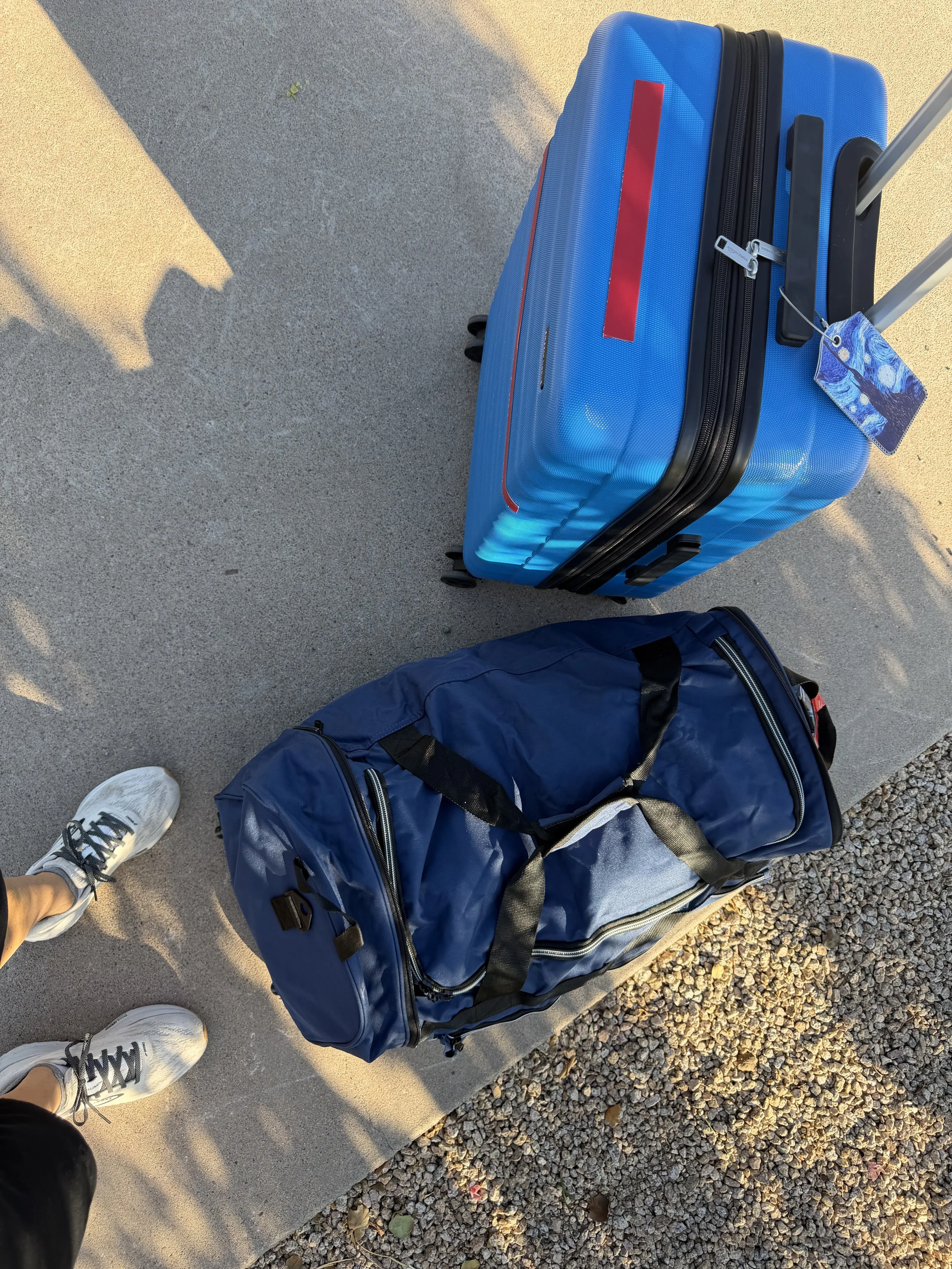
It was also a lesson in how little we actually need to get by. I lived out of two small suitcases. I rotated through the same five or six cycling outfits and a handful of non-cycling clothes. Nobody cared if I wore the same shirt several times. In fact, I’d bet no one even noticed.
I didn’t need a closet full of options or a different outfit for every occasion. I needed a few things that worked, and I needed to take care of them.
There was something wonderfully freeing about that.
It reminded me of some of the ideas I’ve been exploring in my manuscript-manifesto, called Finding Enough in a World Wired for More. (Hoping to get that bad boy published soon; anyone know a publisher who may be into me?!). We spend so much time managing stuff, making decisions, maintaining things, and trying to keep up with all the demands of everyday life. Strip a lot of that away, and it’s amazing how much mental space becomes available.
Plus the clean and uncluttered vibe of hotel rooms and wow: The mental chatter really quiets down. Our first-world existences are so blessed, that is’ common to be overwhelmed in decision fatigue on a daily basis. This was a divine departure from that mental noise (and affirmed for me why Steve Jobs and Obama wore more or less the same thing daily- it’s SO easy and saves decision making for more important matters!).
I’m not suggesting we all need to live out of two suitcases or hotel rooms forever. But I did come home with a renewed appreciation for simplicity and for the freedom that comes when we focus on what actually matters. (I also got really good at getting into the shower wearing my kit, washing myself and doing laundry at the same time, getting creative with hanging things to dry in my room, and rotating kits and cycling apparel as needed given the constraints of the day or the lodging!).
What I wish I’d packed — and what I wish I’d left behind
Speaking of simplicity, I did learn a few things about packing.
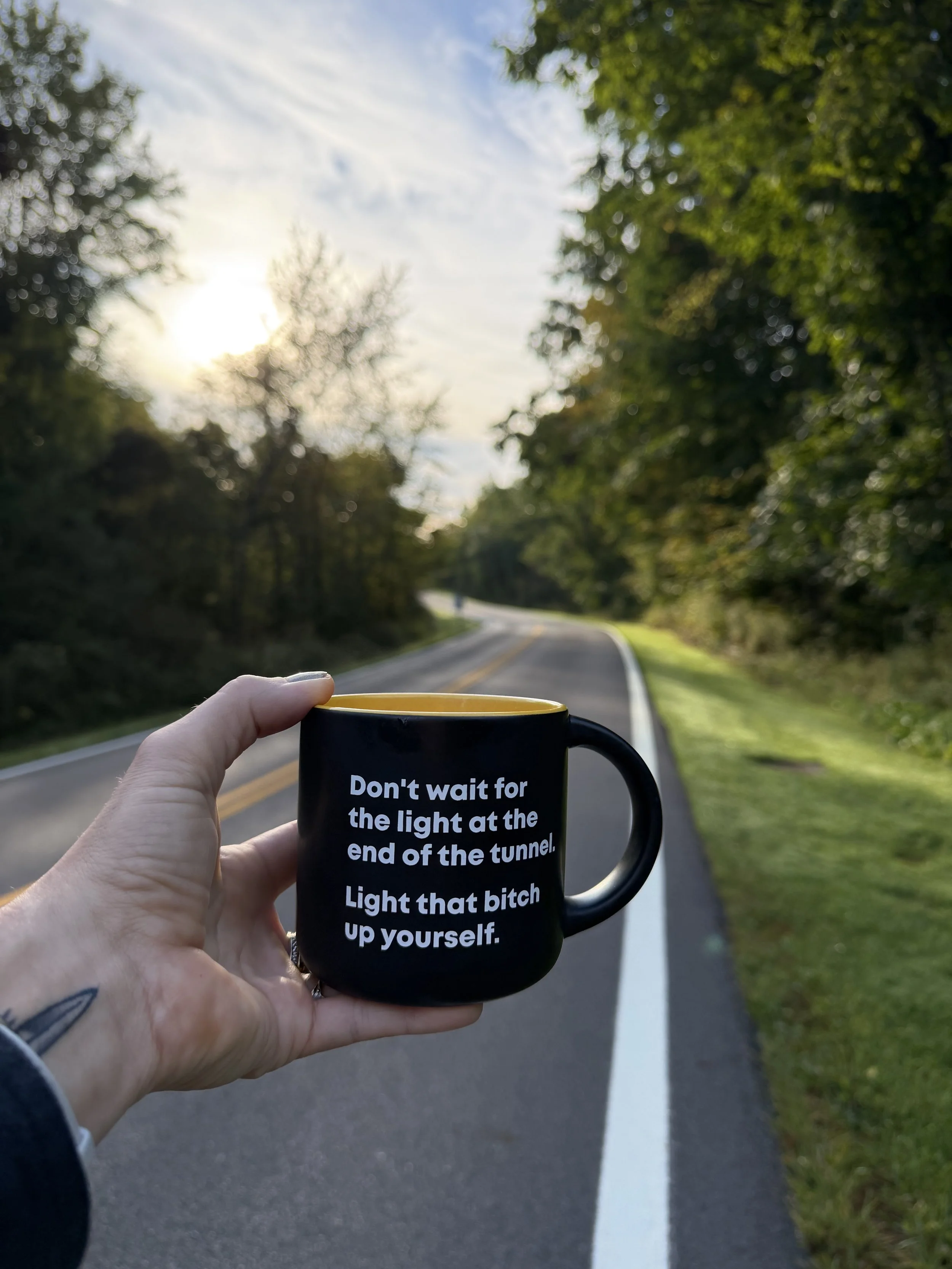
I finally wised up in Oberlin and bought myself a coffee mug that I used every morning for breakfast and in my room, so I could stop tossing so many cups. I got it at the cutest vintage shop called Ratsy’s Shop, where I bought a pair of PERFECTLY fitting jeans for $20 and chatted with the owner for a LONG time (she was awesome!).
One thing I really wish I’d brought was a reusable plate, bowl, silverware, and coffee mug.
It sounds like a small thing, but I was surprised by how often hotel breakfasts involved disposable paper or cardboard plates, plastic cups, and single-use utensils. Every morning, I’d find myself throwing things away and feeling a little guilty about the waste.
I had plenty of room in my luggage. I could easily have packed a small set of reusable items and washed them in my hotel room each night.
It would have been a simple way to reduce some of the waste associated with traveling for that many weeks.
I also learned that I didn’t need nearly as many options as I thought I might. The cycling kit was the priority. Everything else was secondary. Maybe a few more bibs and a few less jerseys would have been ideal, but I was pretty dialed in my CAPO cycling gear. Off the bike- let’s be honest, loose-fitting items that didn’t rub or constrain the legs or tummy were key. There was no need-or desire- to dress up (until the final dinner).
A few comfortable pieces that could be worn repeatedly were more than enough.
It’s funny how a long trip can teach you that you don’t need more things. You just need the right things. Like wool. It doesn’t get stinky and can be worn many times between washing. And good chamois! My CAPO bibs get all the credit for why I never had a saddle sore on the trip when so many others did.
A little adjustment at lunchtime
Another lesson came from figuring out how to fuel for long days on the bike.
Our guides did an incredible job providing lunches along the route. We had some truly magnificent lunch stops and meals, and I appreciated the effort that went into making sure we were well fed.
But after the first few weeks, I started noticing that a big lunch wasn’t necessarily serving me well.
There were often still 40 or 50 miles to ride after lunch, and sometimes a large meal — along with a can of seltzer -left me feeling overly full and sluggish.
So I made a change.
I scaled back the size of my lunch and started taking a gel about every 30 minutes instead. The result was much steadier energy throughout the afternoon and a lot less food sitting in my stomach while I was trying to ride.
It was a small adjustment, but it made a noticeable difference.
Sometimes the answer isn’t more food. It’s better timing and a little more attention to what your body is telling you.
You’re welcome, digestive system.
I also went without data on my second return to the trip. That’s right. I skipped power and heart rate and was “raw dogging it” as the kids say. I just set my Garmin screen to the route map and that was all I paid attention to. Not TSS. Not training peak numbers or metrics. I knew my fatigue was deep, I didn’t need data to confirm it. And I really enjoyed riding to ride and not riding for the data. (Highly recommend).
The parts that weren’t quite so magnificent
Of course, not every day was spectacular.
There were long days, challenging climbs, rain, crosswinds, headwinds, and stretches of road that were less than inspiring. A 100-mile day into a strong headwind or in cold rain (or both) is not something I would necessarily put on my list of favorite memories. Cold fingers and toes are joy-killers for me.
There were also the realities of group travel. Put a few dozen people together for weeks on end, add physical fatigue, daily logistics, different personalities, and limited downtime, and eventually the edges start to show.
People get tired. Nerves get frayed. Not everyone sees things the same way, and not every interaction is going to be pleasant.
I had plenty of opportunities to practice the idea that that’s not about me.
It was a useful reminder that I can control my own attitude, my own behavior, and how much energy I give to things that don’t really belong to me.
There were also days when the food, accommodations, or logistics were less than ideal. That’s part of traveling for that long, especially when you’re moving through so many different towns and relying on a whole network of hotels, restaurants, and support.
And honestly, sometimes you just get tired of riding your bike.
Well, maybe not tired of riding your bike exactly — but tired of getting up, putting on cycling kit, packing your things, and doing it all over again.
The trip was a privilege, and I don’t want to suggest otherwise. But it was also a big physical and logistical undertaking. There were days when I was ready for a shower, a meal, and a little quiet.
I think it’s important to say that, too. A great adventure doesn’t have to be wonderful every minute to be worth doing.
Would I do it again? Would I recommend it?
I’m glad I did this trip. Very glad.
Would I do another cross-country ride? For sure—although I’d probably want to ride a different route, like the Southern route, to experience new states and regions; I could absolutely see myself doing another long-distance adventure but preferably in new places.
Would I recommend a trip like this to someone else? Absolutely — with a few qualifications.
You need to enjoy cycling, be comfortable spending long days on a bike, and be willing to adapt when things don’t go exactly as planned. You need patience, a sense of humor, and an ability to roll with the inevitable changes in weather, food, accommodations, group dynamics, and daily logistics.
You also need to understand that a supported group ride is a very particular kind of experience. You’re not entirely in control of the route, the schedule, or the daily stops. You’re sharing the experience with a lot of other people, and that can be both one of the best parts and one of the more challenging parts.
But if you enjoy seeing new places, meeting people, being outside, and having a daily purpose that is as straightforward as getting on your bike and riding to the next destination, it’s a pretty extraordinary way to experience the country.
I would also encourage anyone considering it to think about what they want out of the experience. Is it the mileage? The scenery? The camaraderie? The challenge? The opportunity to see the country at a slower pace? All of those things can be part of it, but knowing what matters most to you can help shape how you experience the trip.
For some on the trip they wanted to stop at all the stops, see all the landmarks and visit coffee shops and museums and try to pack on as much sightseeing as they could. For my group we really wanted to ride hard, get the mileage done and have an afternoon to enjoy before dinner. Some wanted to sample breweries or ice cream shops. Some wanted to catch sports events or other features. Some didn’t want to take a single day off the bike. Everyone had different agendas and I felt it was important for us all to support everyone having their own experience, without judgement.
Full circle: From the walker to the Atlantic
There is one more reason this trip meant so much to me, and it’s probably the hardest part to put into words.
Four years ago, following a serious crash in 2022, I was in a wheelchair for a time and then progressed to using a walker. My dominant arm and dominant leg were out of commission, and I had a long road ahead of me. The recovery took time, patience, and a whole lot of work. It was brutal. A motorist had collided with me while I was riding my bike, causing significant injuries to my right knee and shoulder (both of which required plates and screws, and cadaver graft, to repair) and it changed everything. (Watch engineinsidefilm.com for a glimpse of my physical state back then). Back then people asked me -do you think you’ll ever ride a bike again after this? And I remember saying (and thinking), that I honestly didn’t know.
As a cyclist, an athlete, and someone whose professional life has revolved around cycling, that experience fundamentally changed me. I spent years rebuilding strength, confidence, and trust in my body. I had to learn to ride again with a different perspective and to gradually stack positive experiences on top of the difficult ones. It really does take a LONG time to come back to form as well as to regain a healthy mental attitude about being on the road with drivers, after a driver has done something that makes you question everything. When we assume people follow the rules and that’s how we all stay safe, and then one person deviates from that norm, suddenly every driver you encounter becomes suspect. It is very hard to TRUST again.
I’d already been hit by a motorist before in 2019, but the 2022 crash brought a different level of disruption and recovery. It left me with a lot to work through, physically and emotionally. I couldn’t say this then but I can say it now: it was both one of the worst, and one of the best things, to ever happen. In some ways, the Megan that stepped out of that experience is the one who gives herself permission to pay for and take a 50-day vacation riding across the US, whereas the Megan before the crash was too busy working and chasing and too restricted in her mindset about what might be possible.
So yes- I healed, but as an entirely different version of myself. After I got divorced in 2015, my friends nicknamed me Megan 2.0, and so after this crash and rebirth I’d say I am in my Megan 3.0 era. Life is like that: a series of upgrades and new ways of being!
Anyways…. Somewhere along the way, riding across the country became a goal. A bucket-list item, certainly, but also something more personal. It felt like a next step — a way to see what was possible after everything that had happened.
And then, there I was, standing in the Atlantic Ocean in Portland, Maine, holding my bicycle overhead.
When I look at the two photographs side by side — the one of me with a walker and the one of me standing in the ocean with my bike — I see more than the distance between two moments in time.
I see the work. The setbacks. The patience. The people who helped me. The rides that rebuilt my confidence. The days when I wasn’t sure how much progress I was making, but kept going anyway.
I don’t believe a bicycle ride magically resolves everything, and I certainly don’t think healing happens in a straight line. But completing this journey felt like redemption from the 2022 crash in the most poignant and powerful way.
What I brought home
I came home with memories of beautiful landscapes, interesting conversations, new friendships, and a much better understanding of the sheer size and variety of this country.
I came home with a renewed appreciation for simplicity, for the kindness of strangers, and for the value of getting out of our usual routines and seeing things from a different perspective.
I also came home with a little more optimism about sharing the road, a few new places on my list of potential homes, and a reminder that people are often much more generous and curious than the headlines might lead us to believe.
And perhaps most importantly, I came home with the satisfaction of having done something that once seemed a long way off.
A cross-country cycling adventure. Fifteen states. One bicycle. A whole lot of America.
I didn’t ride every mile of the route, and my journey wasn’t a perfectly uninterrupted line from one ocean to the other. But I showed up, rode the miles I could, made the journey back to the group, and stood in the Atlantic at the finish.
Not every mile was easy. Not every day was beautiful. But the experience as a whole was something I’ll carry with me for a very long time.
I’m grateful I said yes to it. And I am already looking ahead to my next big bike adventures!
If the highlights above satisfied your curiosity, thanks for coming along for the ride. I appreciate you reading!
Or — do you want more?
If you're interested in the nitty-gritty of the actual adventure — the daily rides, mileage, elevation, towns, routes, climbs, scenery, and occasional suffering — keep reading! I've included a more detailed day-by-day account below for those who love DETAILS and long-form blogs ;)
For each day I’ve included my Strava ride (a screenshot of the route as well as my comments that day) as well as the verbatim “Today’s highlights” notes from our Trek Travel itinerary (*ALL credit goes to TT for those bulletpoints; I simply copy/pasted here so you could enjoy the notes we got each day as we embarked on the route).
And- I also include photos of the day, where applicable or interesting… ENJOY!
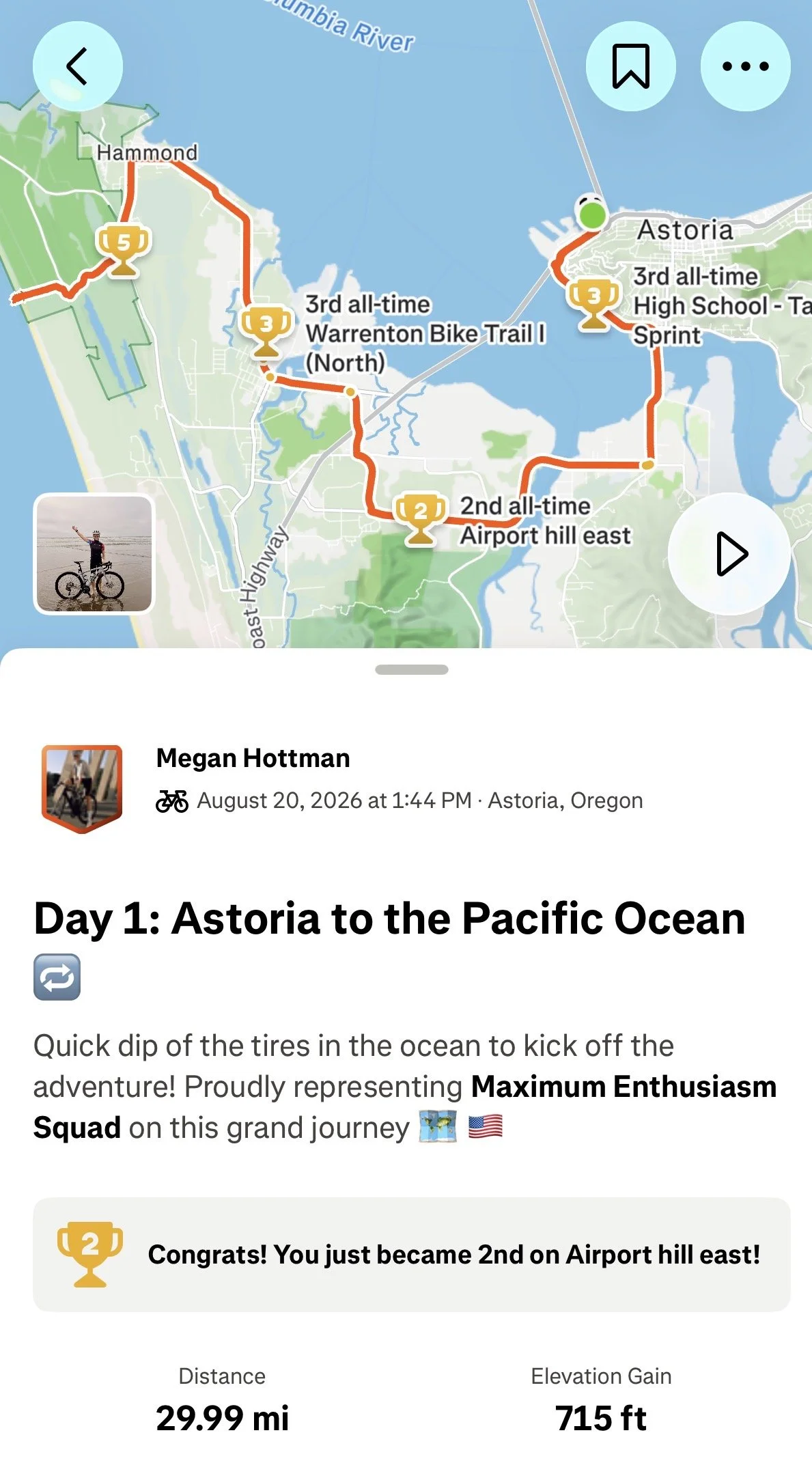
DAY 1! August 20, 2026
TODAY'S HIGHLIGHTS
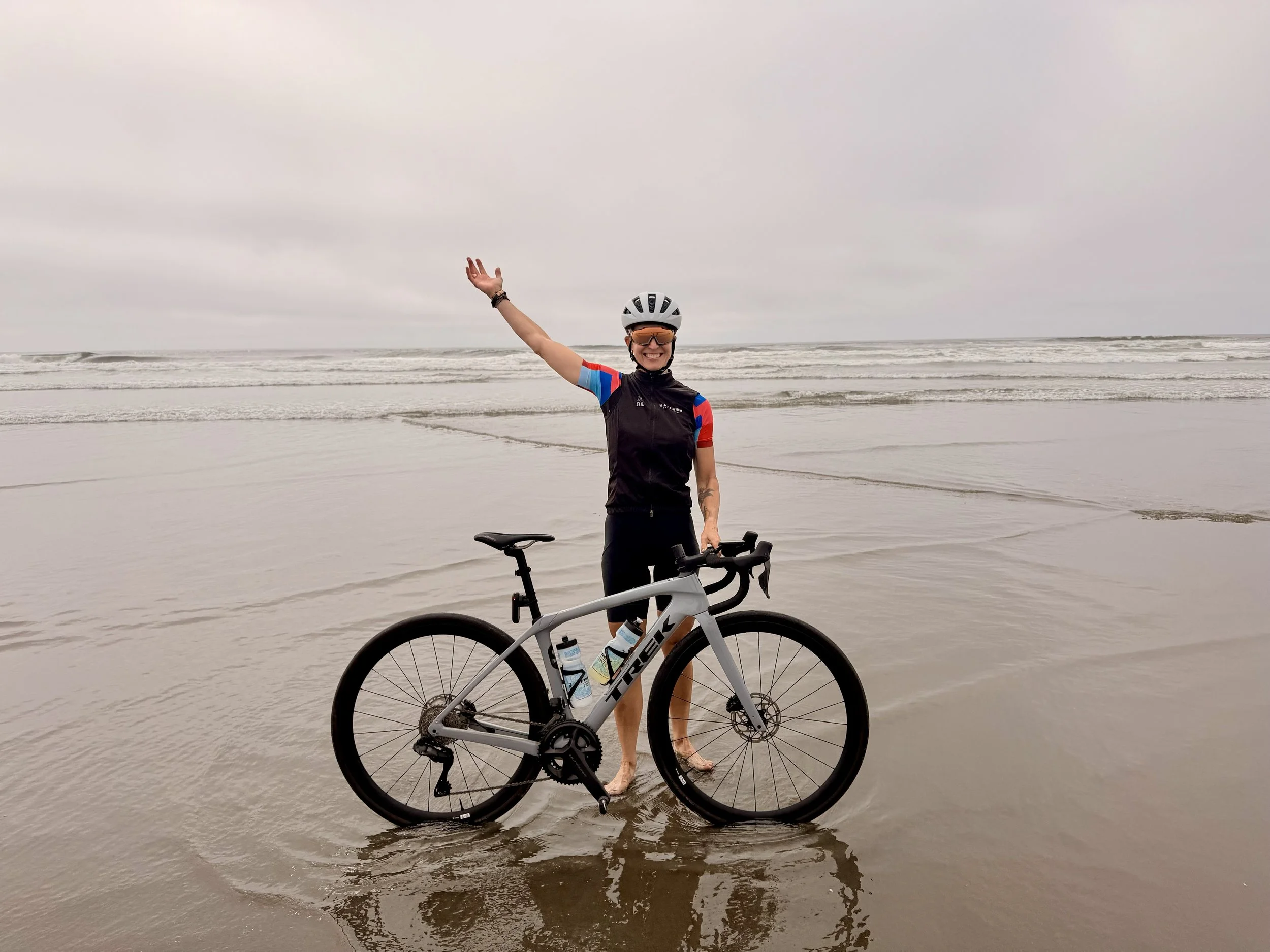
Dip your tire in the Pacific Ocean to commemorate the start of this epic journey!
History:
During the winter of 1805-1806, Lewis and Clark spent a winter in a log cabin they named Fort Clatsop southwest of modern day Astoria. They were hoping to be met on the coast by a ship to take them back East, but instead had to return overland.
Astoria first became well known to European settlers around 1810 when it was established as an outpost for fur trapping, and would become an important outpost for European exploration of the area.
Astoria attracted a host of different immigrant populations in the mid 1800’s. The largest populations came from Sweden, Finland, and China. The Finns and Swedes primarily became fishermen, while the Chinese worked in the canneries. By the late 1800’s, 22% of Astoria’s population was Chinese.
The film “The Goonies” was filmed in Astoria
Where the Columbia River meets the Pacific Ocean is a very important shipping lane, as it connects the city of Portland to the sea. This inlet is called the Northwest Passageway, and is one of the most treacherous bars in the world. A select group of pilots are the only people allowed to steer ships through this crossing.
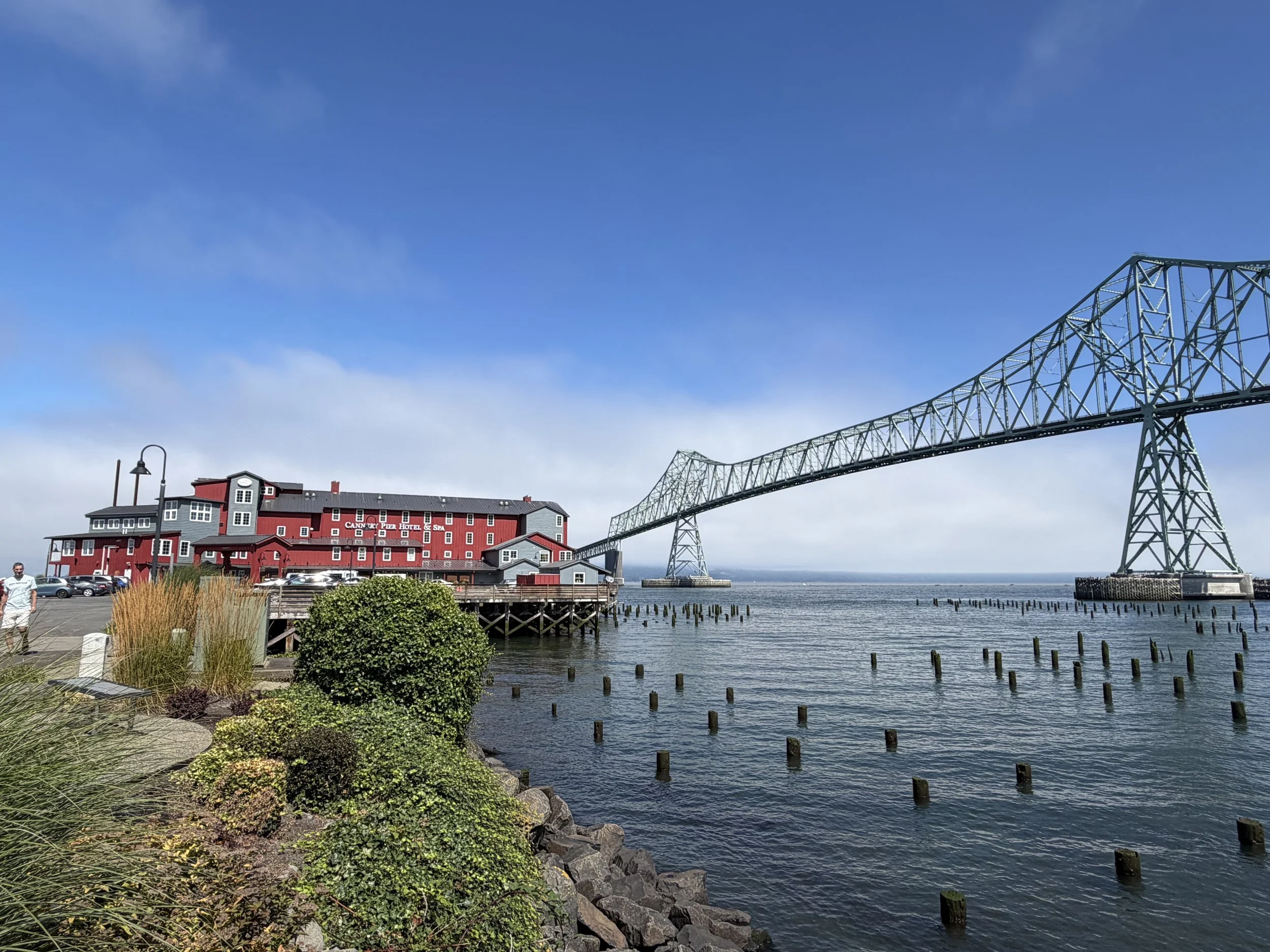
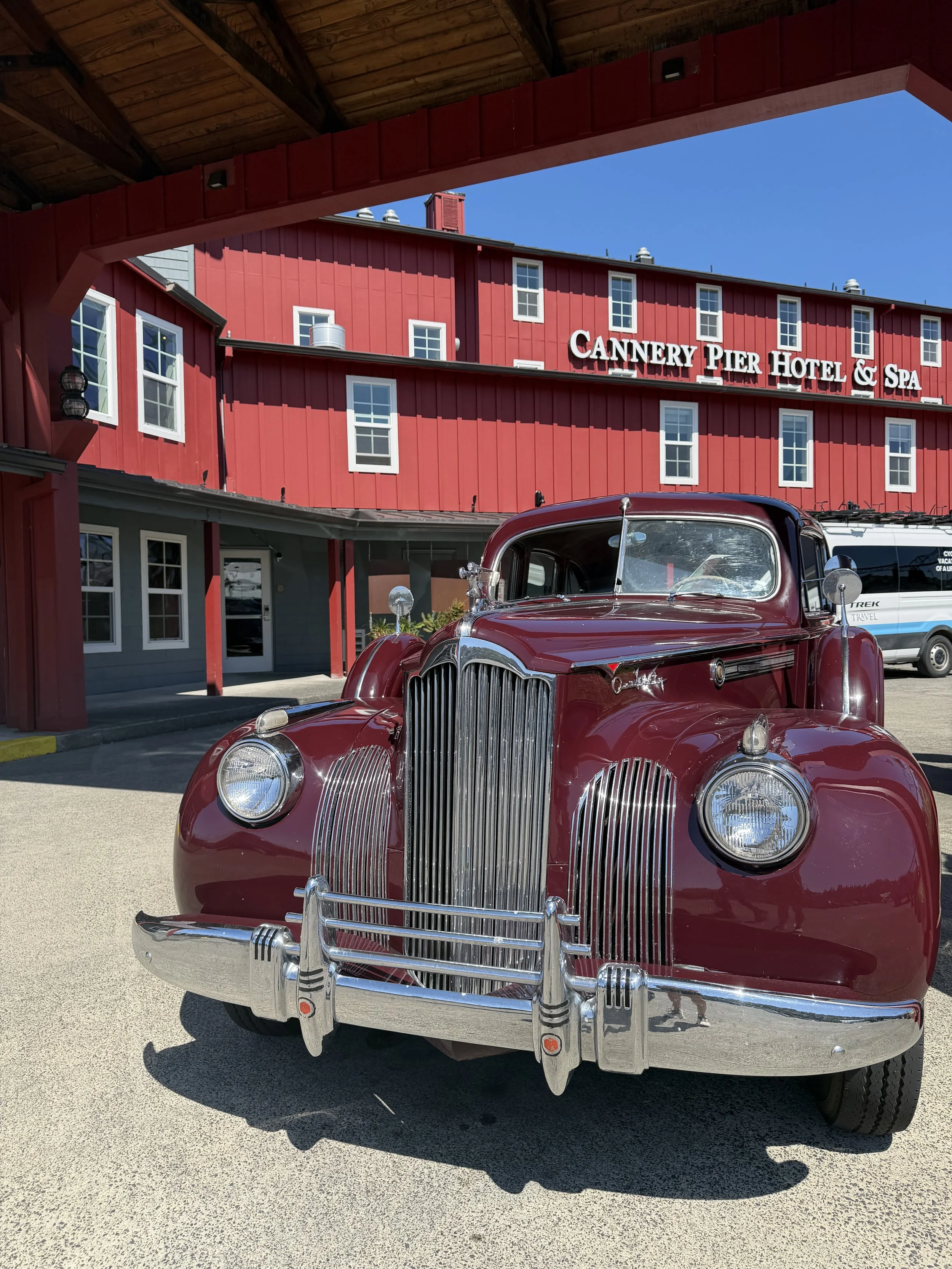
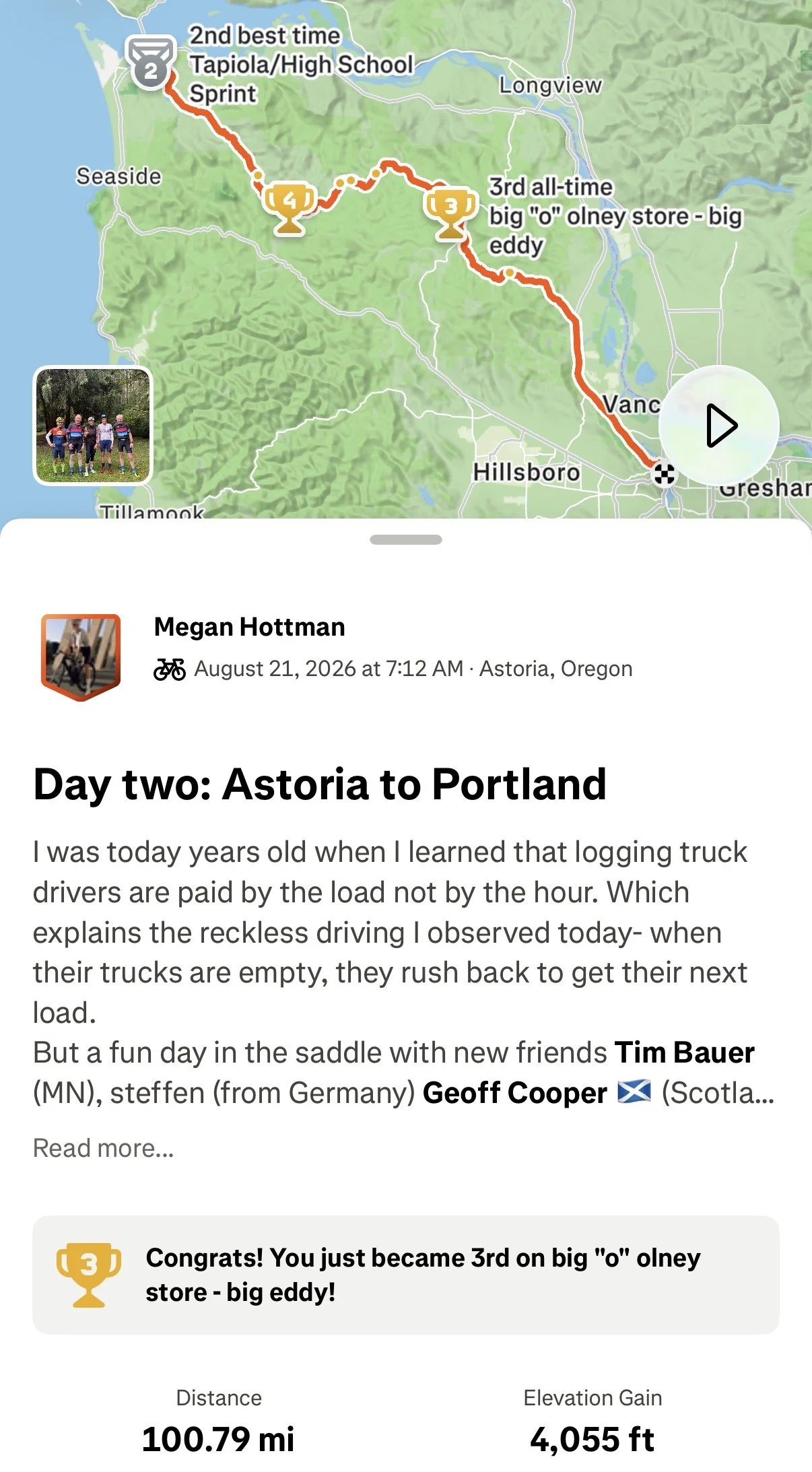
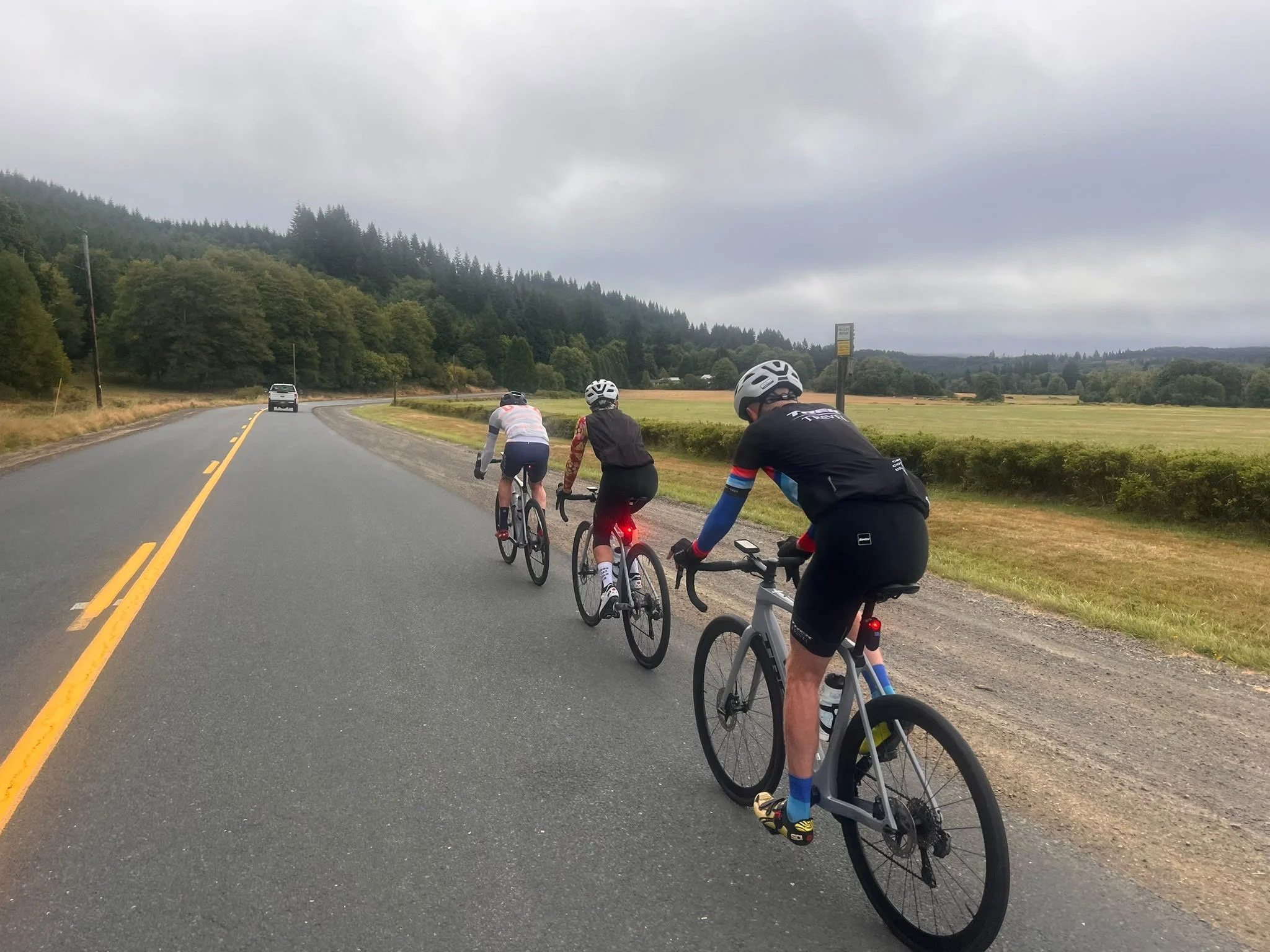
Day 2, August 21, 2026: TODAY'S HIGHLIGHTS
Portland is the largest city in Oregon and 47% of Oregonians reside within the Portland metro area.
The city is named after Portland, Maine and began to be populated in the 1830’s
The cities early economy was heavily dependent on logging, and used the Willamette River as a primary artery of trade.
At the beginning of the 1900’s the city had a reputation for being one of the most dangerous port cities in the world and was a hub for organized crime and racketeering, however by the end World War 2, that reputation had dissipated.
Beginning in the 1960’s Portland became a bastion for progressive politics, which is when is began to acquire its reputation as a liberal city.
Prior to colonization, the Portland area was populated by two different band of Indigenous Chinook people, the Multnomah and the Clackamas
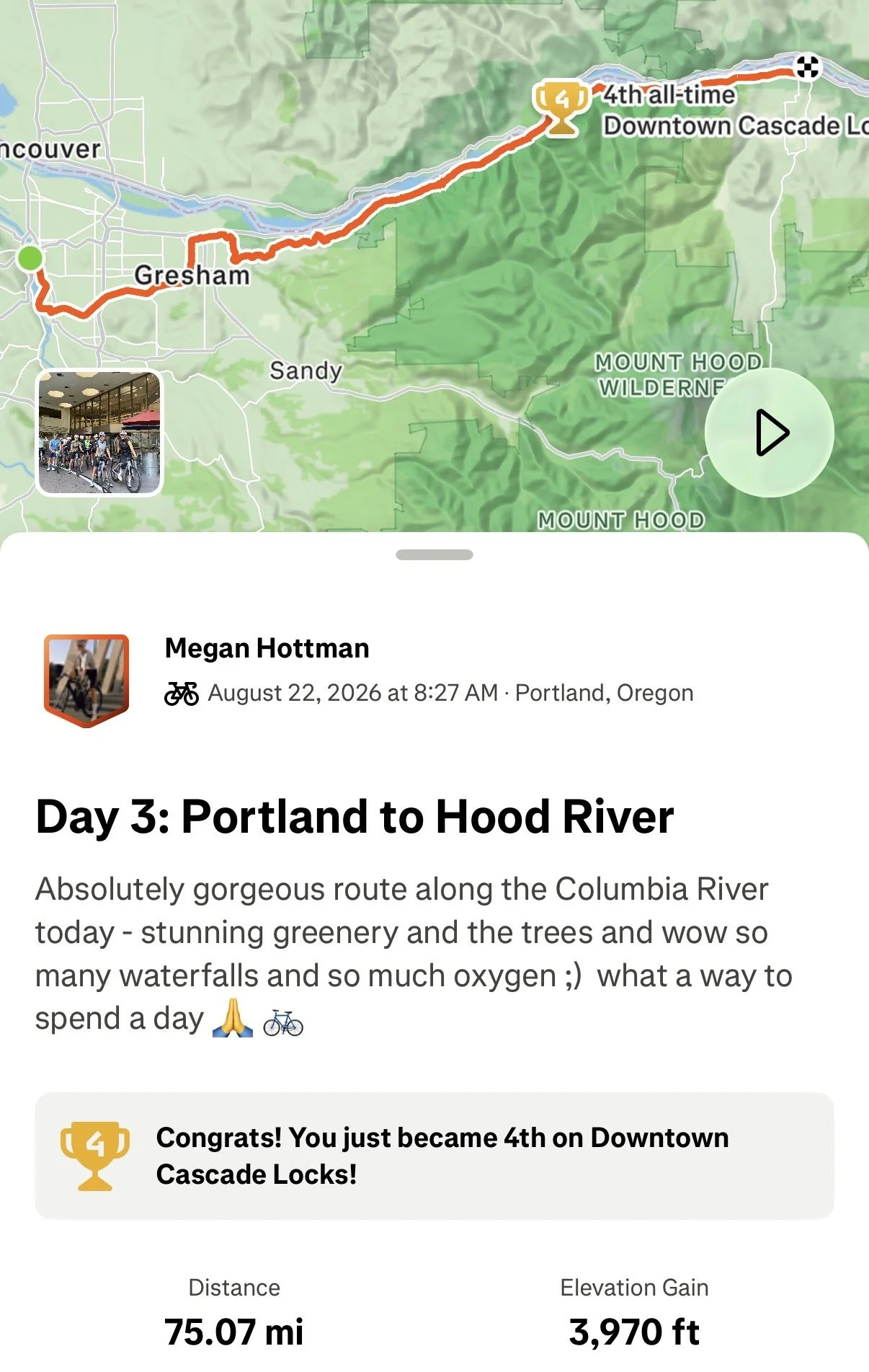
Day 3, August 22, 2026: TODAY'S HIGHLIGHTS
The Columbia River is the largest river in the Pacific Northwest extending 1,243 miles and has the 37th greatest discharge of any river in the world
There are 14 hydroelectric dams along the main stem of the Columbia River
The dam is a very heavily used shipping route and industrial hub
These dams have greatly altered the environment surrounding the river as well as the ability for salmon to migrate
Prior to damming, the Columbia River used to be the site of one of the world's largest salmon runs, seeing between 15 and 20 million estimated salmon yearly.
Day 4, August 23, 2026: TODAY'S HIGHLIGHTS
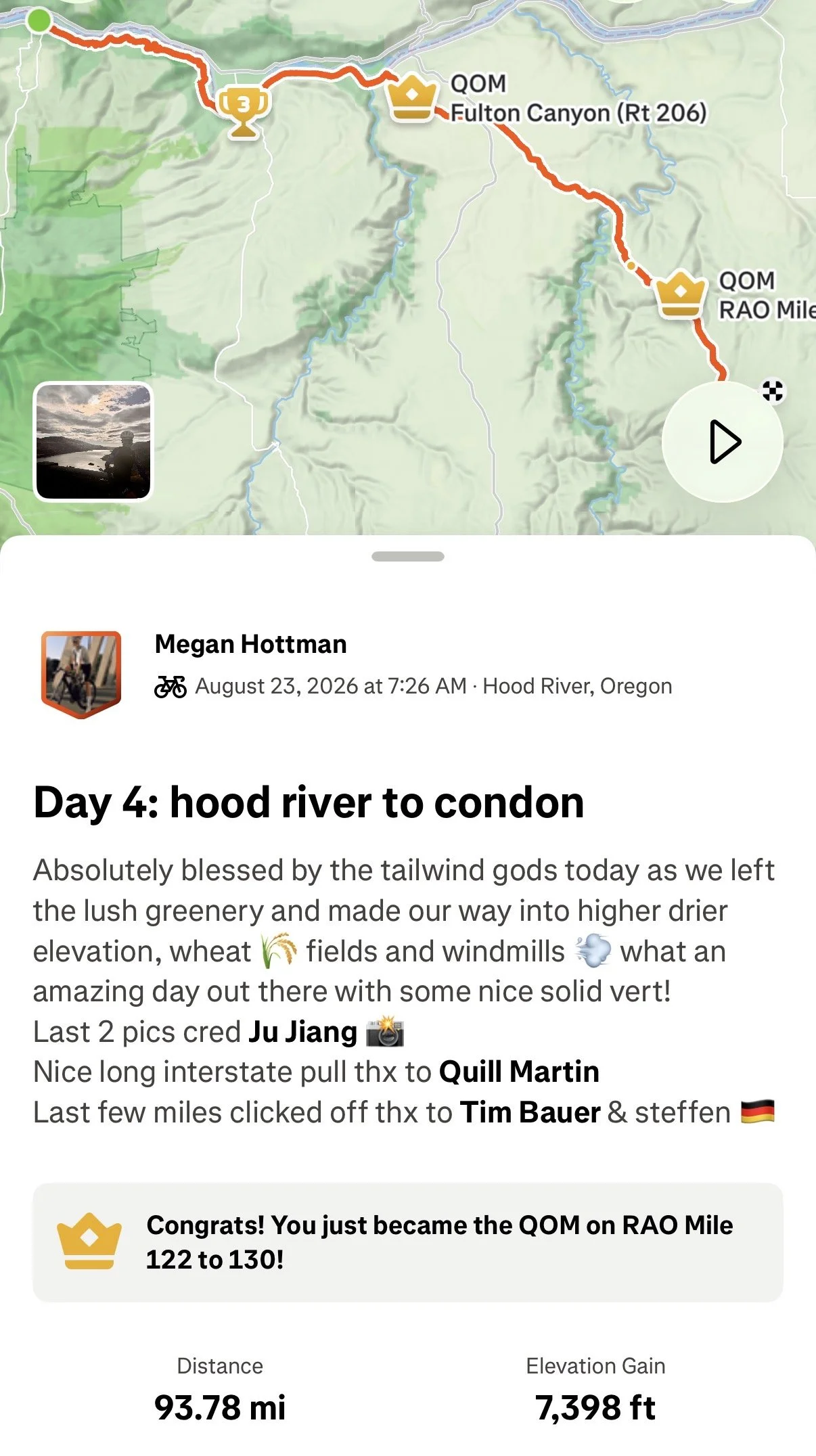
Today you will leave the lush part of the state of Oregon, and enter into the high desert environment of Eastern Oregon.
Eastern Oregon is much less populated than the western/ coastal part of the state and is an area that relies heavily on farming, logging, and tourism for its economic vitality.
It receives considerably less yearly rainfall than the Western part of the state due to a phenomenon known as a "rain shadow" which involves the Cascades Mountain Range absorbing most of the coastal precipitation.
Many of the interesting rock formations you ride past are Basalt
Basalt is an igneous rock, meaning it is cooled lava. 90% of the Basalt you will see was the result of massive volcanic eruptions that covered the entire area 17–14 million years ago.
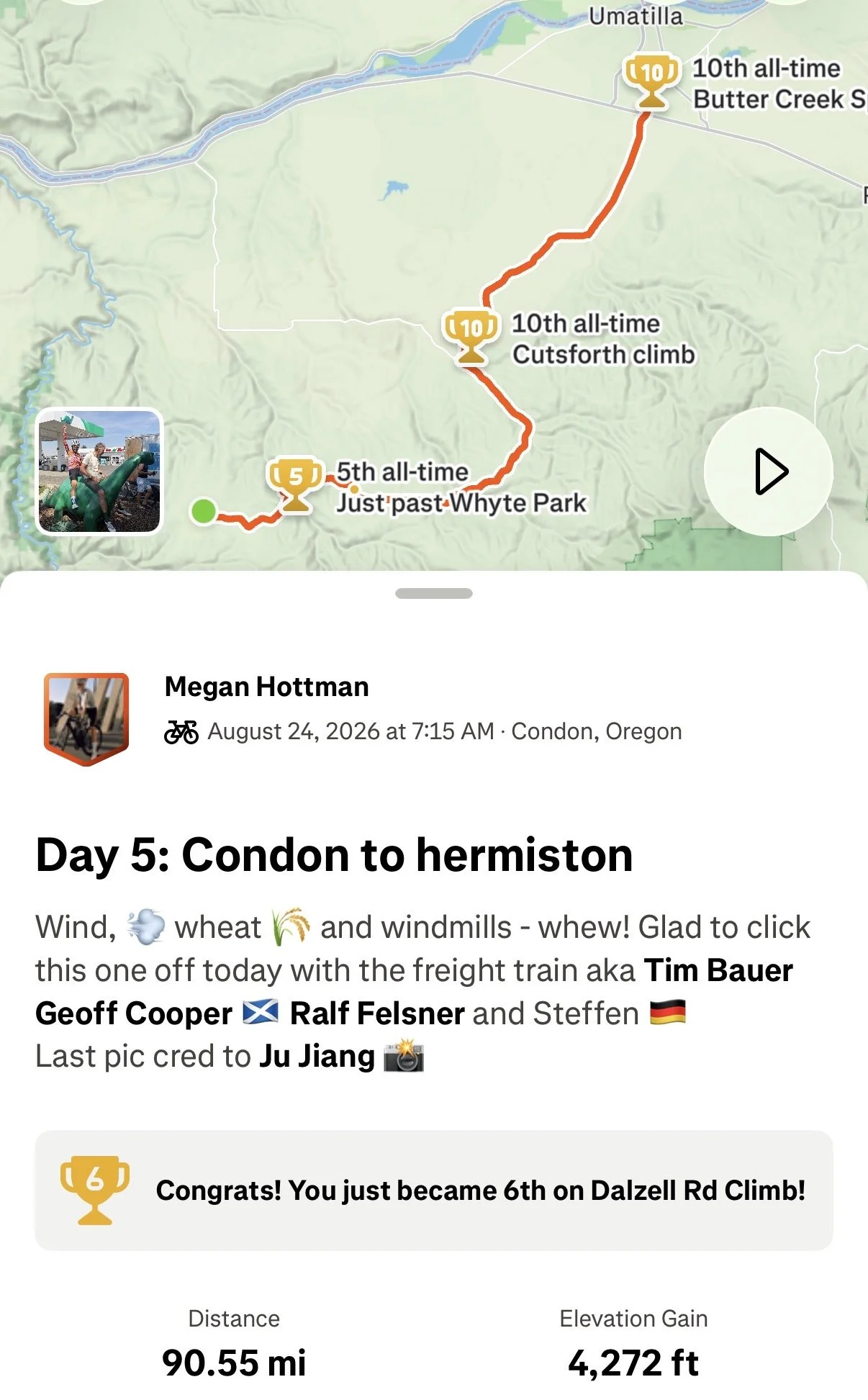
Day 5, August 24, 2026: TODAY'S HIGHLIGHTS
Today is another beautiful day of riding through the high desert of Eastern Oregon.
As you will see, there is a huge amount of wheat grown in the state.
In 2020, Oregon farmers produced 39.5 million bushels which is enough to bake 1,659,000,000 one and half pound loaves of bread, if my math is correct.
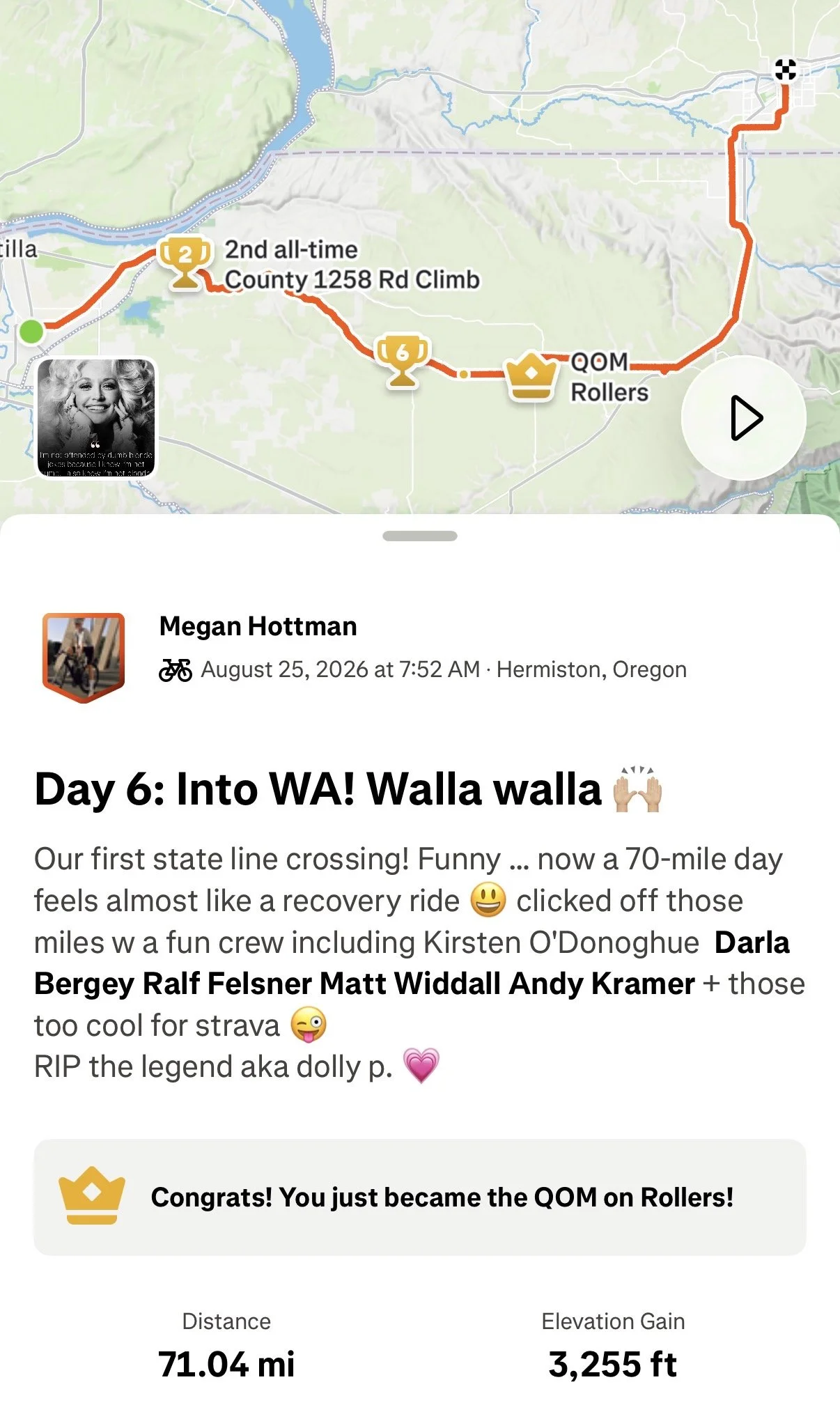
Day 6, August 25, 2026: TODAY'S HIGHLIGHTS
Lewis and Clark came through the Walla Walla area in 1805 and 1806 and liked what they saw.
Not long after that, in the 1830's Narcissa and Marcus Whitman built a mansion amongst the Cayuse Indigenous People who lived here at that time, and since then, many things in the area have been named Whitman
There is a fairly prestigious liberal arts college in Walla Walla called Whitman.
The Marcus Whitman hotel was started collectively by the towns people of Walla Walla when they realized they needed an event space and accommodations for visitors.
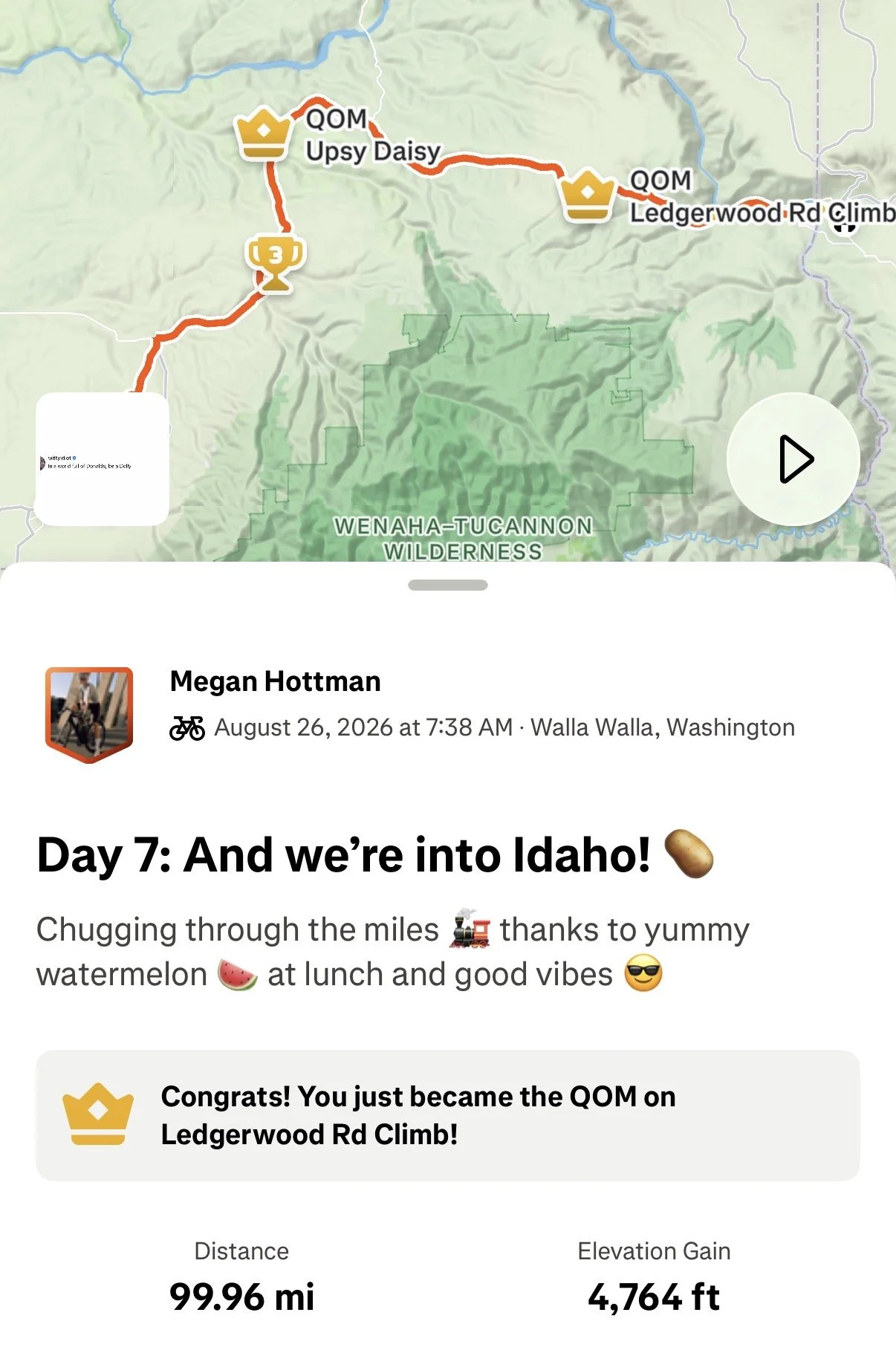
Day 7, August 26, 2026: TODAY'S HIGHLIGHTS
Lewiston, Idaho is the county seat of Nez Perce county. The town got its start after an 1861 gold rush in the area.
Nez Perce is a reference to the Indigenous nation that has lived in the Columbia River plateau for an estimated 11,500 years.
The Nez Perce were the dominant nation on the plateau for much of that time, and were the first to breed the Appaloosa Horse.
There are currently 3,500 registered members of the Nez Perce tribe who primarily live in Idaho
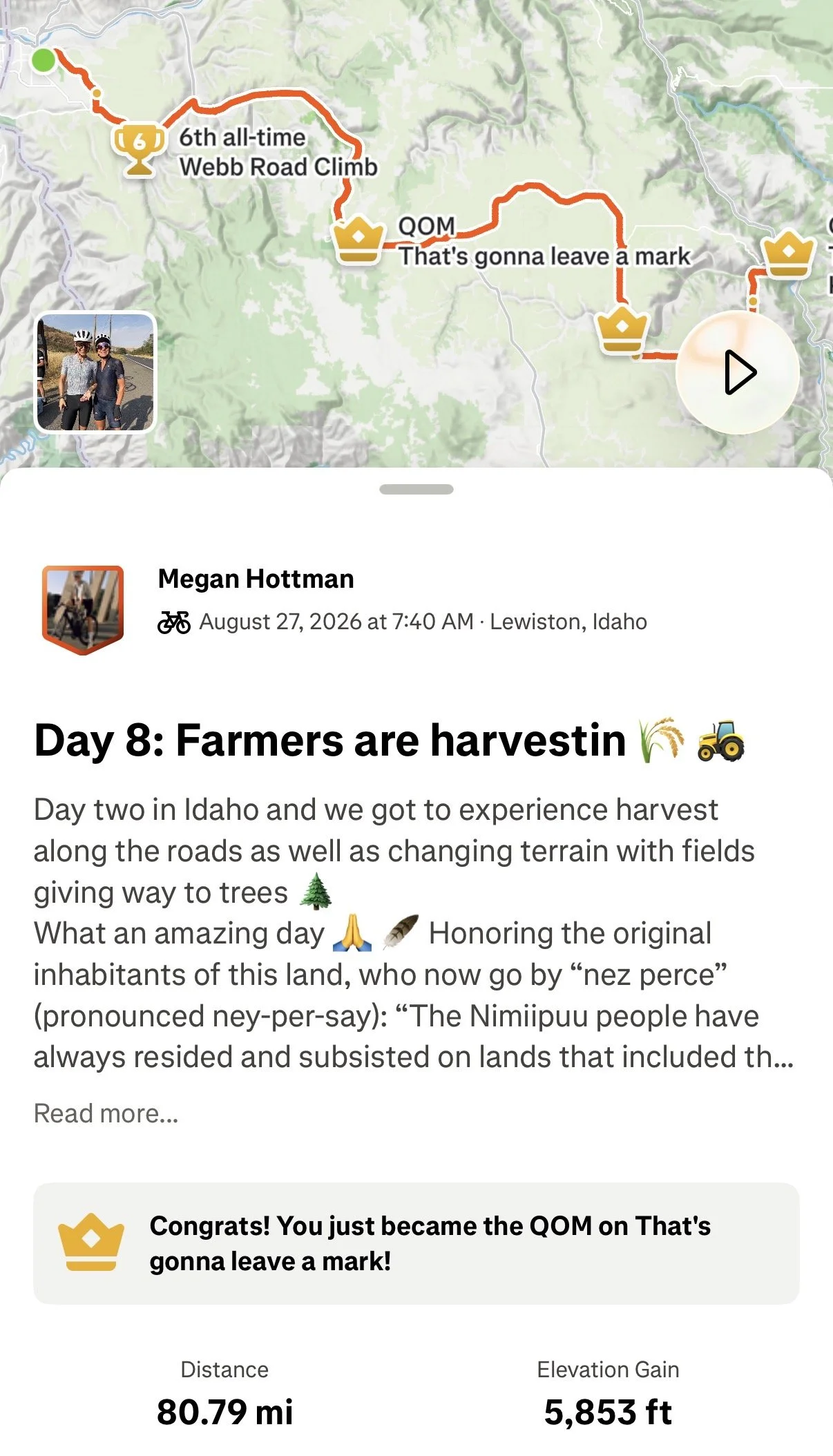
Day 8, August 27, 2026: TODAY'S HIGHLIGHTS
Today, basically the entire ride will be spent within the boundaries of the Nez Perce Indian Reservation
Kamiah was the winter home of the Nez Perce Indians. They came here to fish for steelhead, a staple in their diet, and to manufacture “Kamia” ropes. Kamiah means the place of “many rope litters”.
Chief Joseph was a leader of the Wallowa band of the Nez Perce Tribe and is known for leading 800 Nez Perce over the treacherous terrain of Lolo Pass and the Absorkas in an attempt to avoid war and escape to Canada in 1877. They eventually surrendered just a few days' ride from the border due as they were weak, starving and enduring freezing temperatures.
Day 9- I rode in the van due to sore throat. The crew rode from Kamiah ID to Lolo, up and over Lolo Pass.
TODAY'S HIGHLIGHTS
At Mile 1.5, you will pass a site known as "Heart of the Monster" which is the place where the Nez Perce believe their people were created.
You will spend much of today along the banks of the Clearwater River which is a tributary to the Snake, and eventually to the Columbia.
The Lewis and Clark Expedition floated down the Clearwater River in dugout canoes on their journey to the Pacific Ocean, which they reached approximately 6 weeks later.
The Lolo Trail is a National Historic Landmark, designated for its importance to the Lewis and Clark Expedition, and its role in the 1877 Nez Perce War. The name of the pass is sometimes said to have been Salish version of the French name Laurence or Laurent, but was probably a regular French nickname.
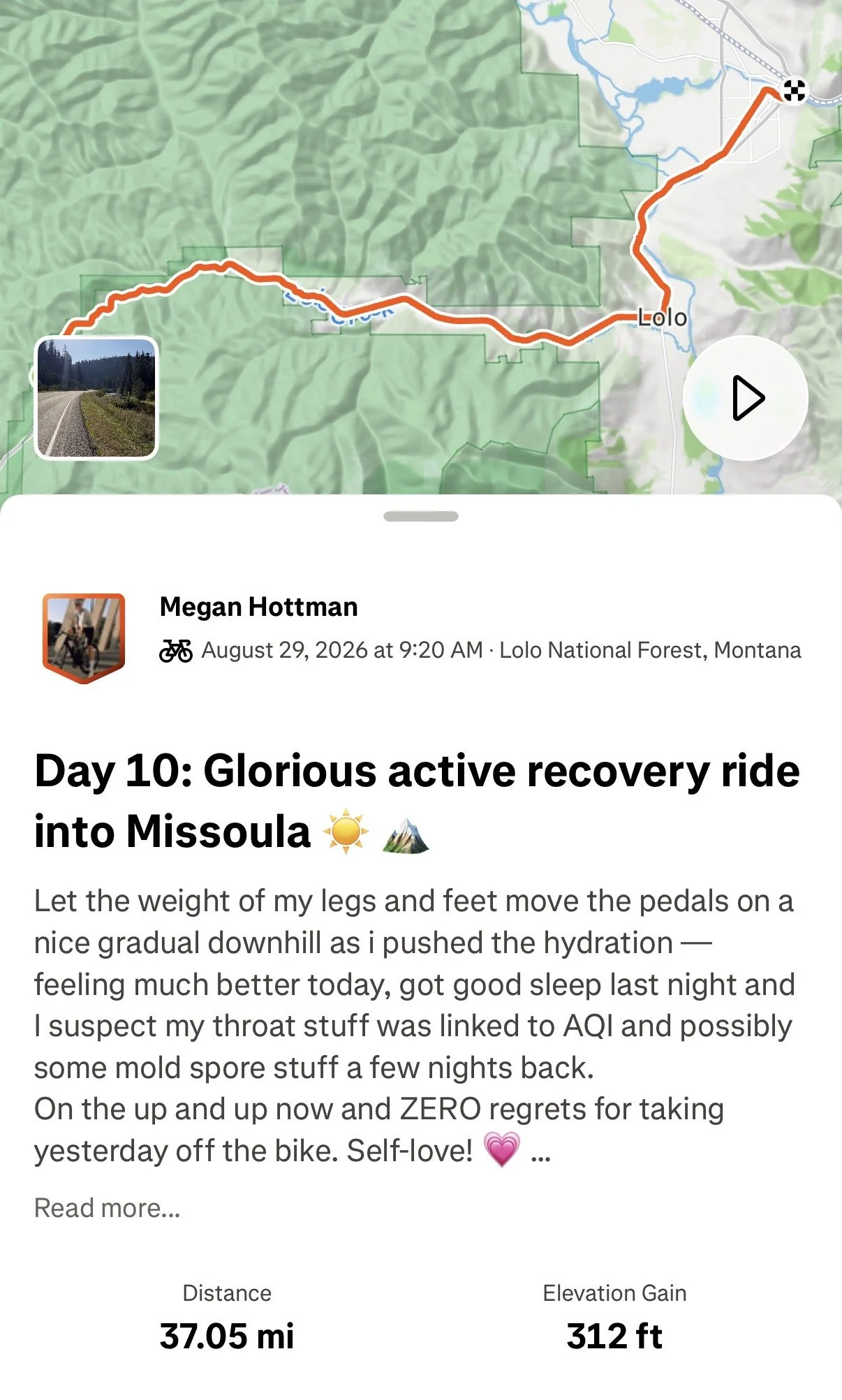
Day 10, August 29, 2026: TODAY'S HIGHLIGHTS
After a late start, you finish descending the gorgeous, winding road from Lolo Pass into the town of Missoula
Missoula is at the confluence of five different mountain ranges, and therefore is often called "the hub of 5 valleys"
It is home to the University of Montana, which has a large impact on the life of the town
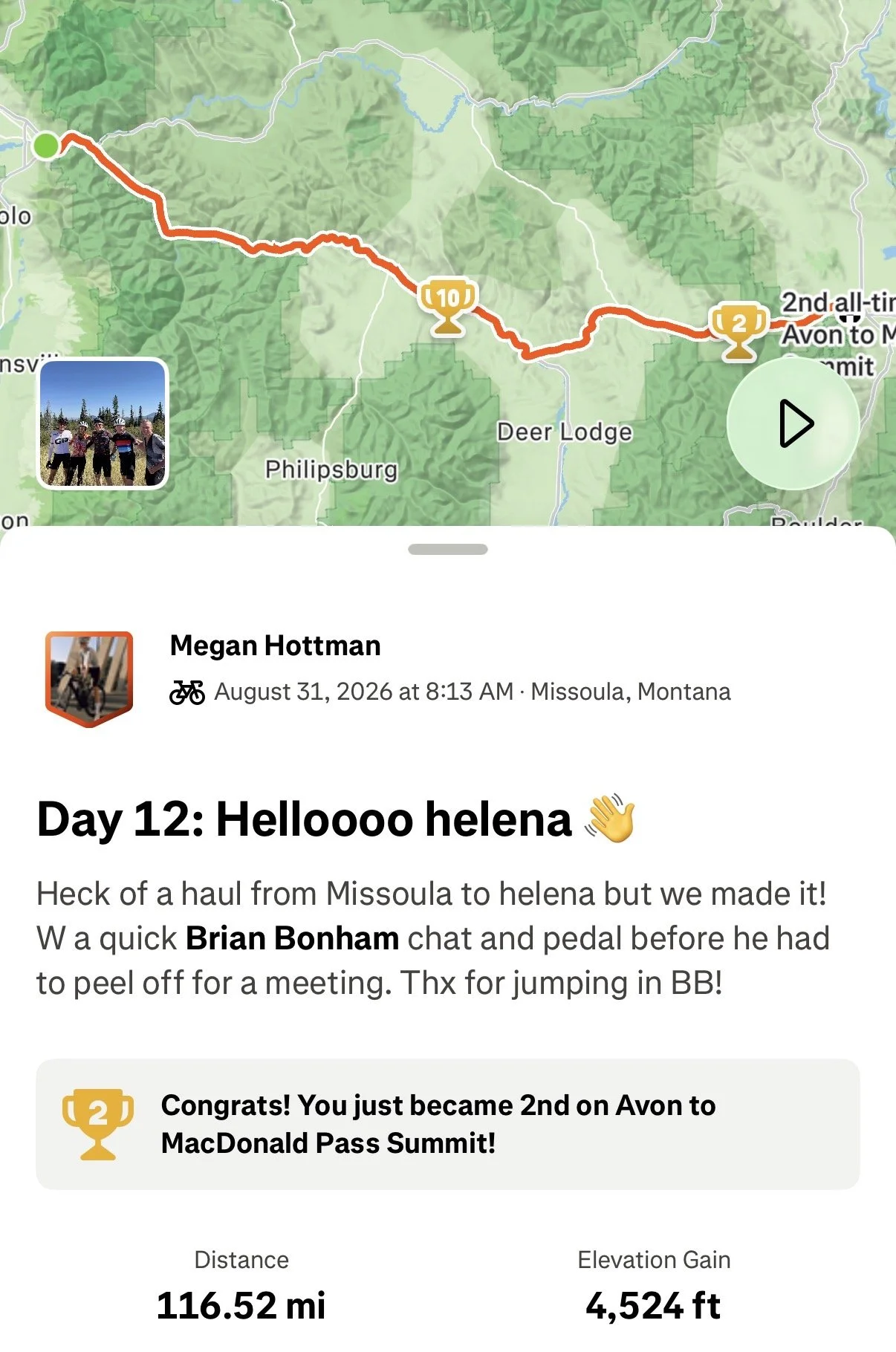
Day 12, August 31, 2026: TODAY'S HIGHLIGHTS
Helena started during the Montana gold rush in the mid 1800's. This allowed the town to become quite prosperous, with approximately 50 millionaires residing in the city by 1888
The town currently has a population of 28,190 making it one of the least populous state capitals in the country
An estimated $3.6 billion in modern money was extracted from the hills surrounding Helena which sparked intense wealth leading to avant-garde victorian architecture and a thriving red light district, in the late 1800's
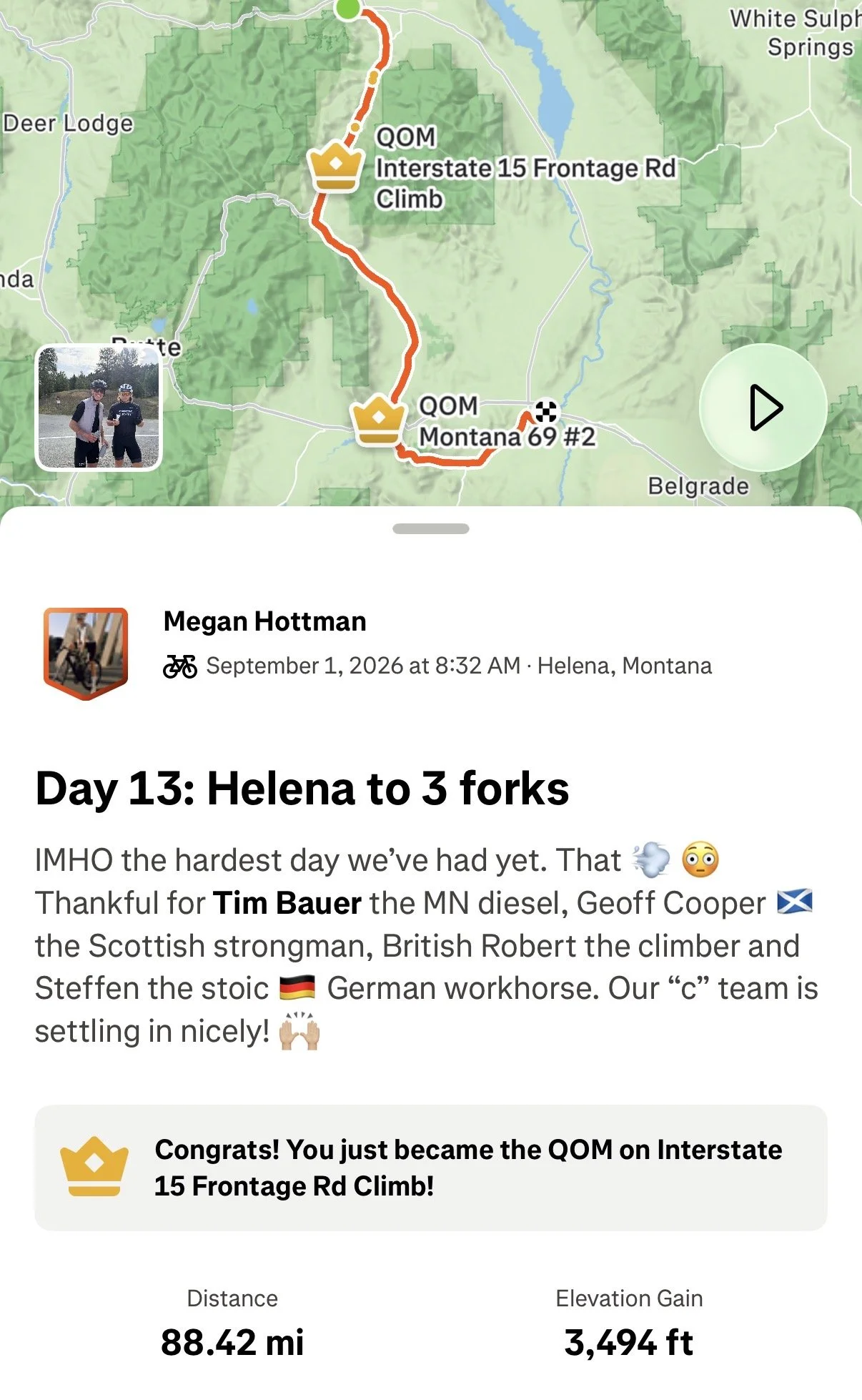
Day 13, September 1, 2026: TODAY'S HIGHLIGHTS
Three Forks is a city in Gallatin County, Montana, United States and is located within the watershed valley system of both the Missouri and Mississippi rivers drainage basins — and is historically considered the birthplace or start of the Missouri River.
The city of Three Forks is named so because it lies geographically near the point, in nearby Missouri Headwaters State Park, where the Jefferson, Madison, and Gallatin rivers converge to form the Missouri River — the longest single river in North America.
Honored in Three Forks, the Native American woman Sacagawea is best known as the interpreter and guide for the Lewis and Clark Expedition. In 1800, she was captured by the Mennetaree tribe near the present site of Three Forks. She later returned to this area with Lewis and Clark and the Corps of Discovery. A statue of Sacagawea now sits in a park off Main Street.
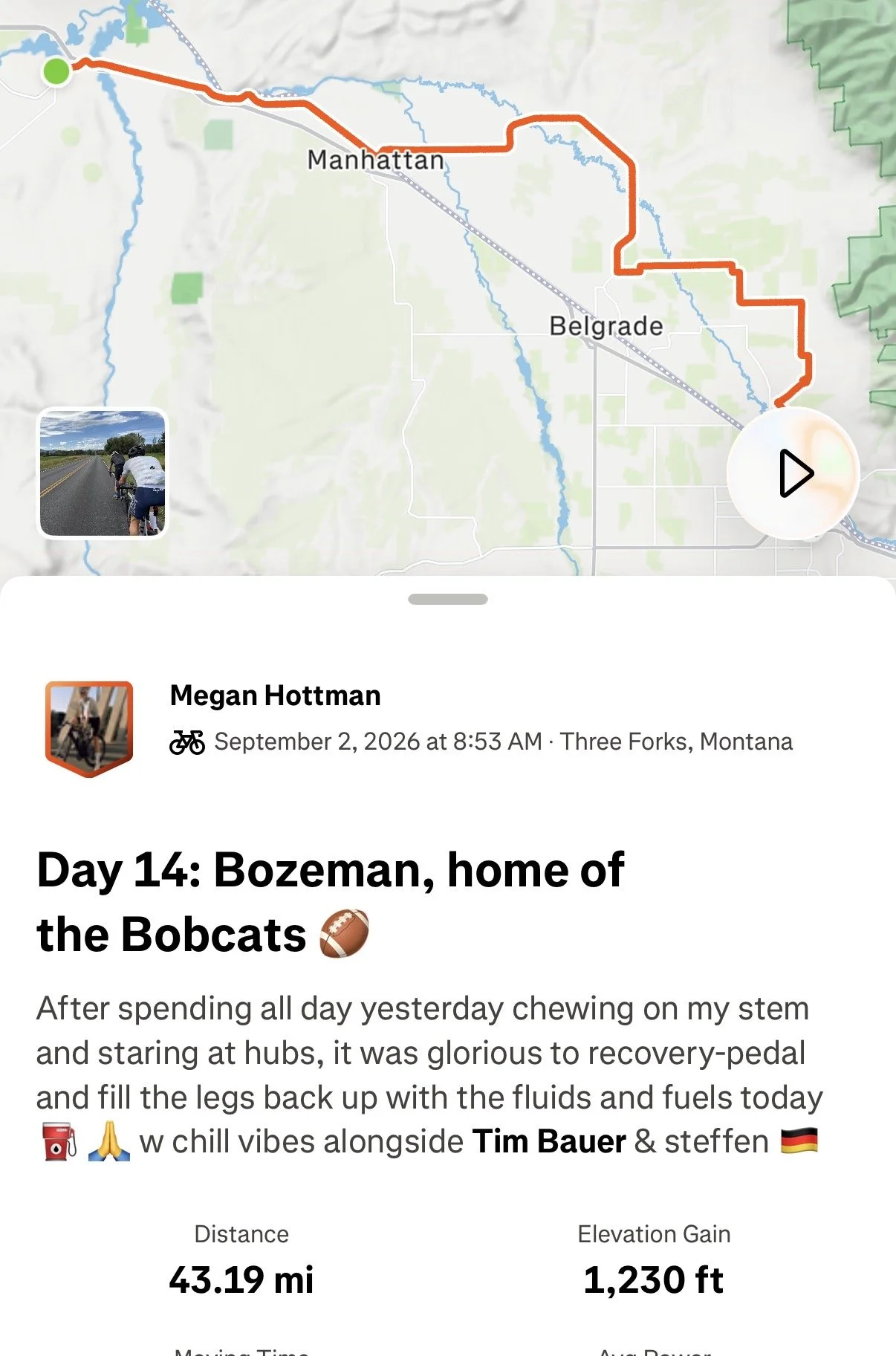
Day 14, September 2, 2026: TODAY'S HIGHLIGHTS
Bozeman is the fourth largest city in Montana and is also home to one of the Montana State University campuses.
It is nearby to both Big Sky Mountain Resort and Bridger Bowl which is a smaller steeper ski hill
Bozeman is growing incredibly rapidly, as it is a very desirable place to live.
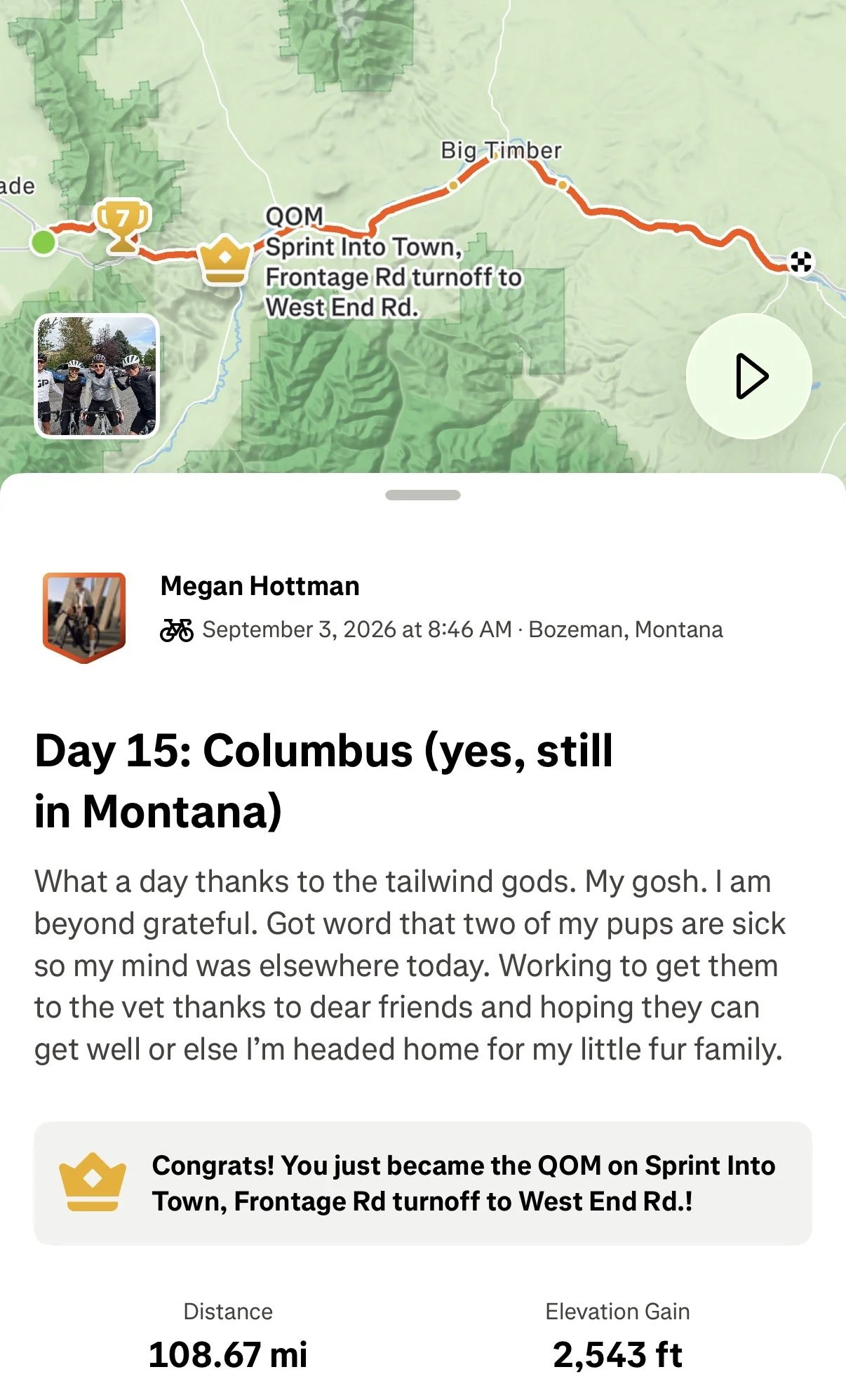
Day 15, September 3, 2026: TODAY'S HIGHLIGHTS
Today's ride will take you along the Yellowstone River and the northern border of Yellowstone National Park.
Columbus also serves as a gateway to the Absaroka-Beartooth Mountains and Yellowstone National Park.
Soak up the majestic peaks and rolling fields of the Rocky Mountains on your last full day in Montana
It was this day that I learned two of my three dogs were sick back home. Having the Billings airport close by and finding just one seat left on the single flight back, I left the trip to take care of my pups.
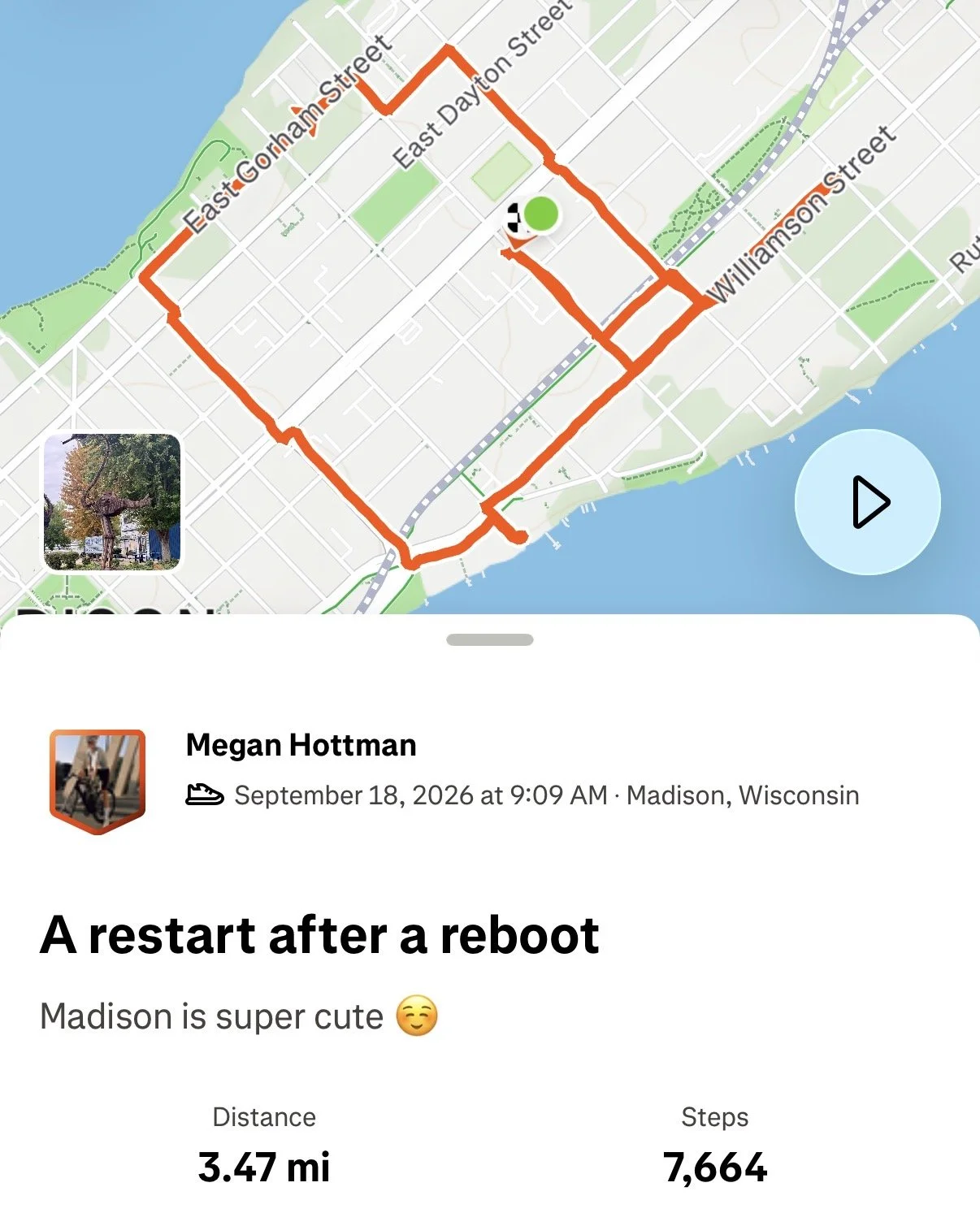
I returned to the trip in Madison WI as the group was rolling in for their third rest day. I wanted to see Madison, and also enjoy the Trek HQ private tour and dinner.
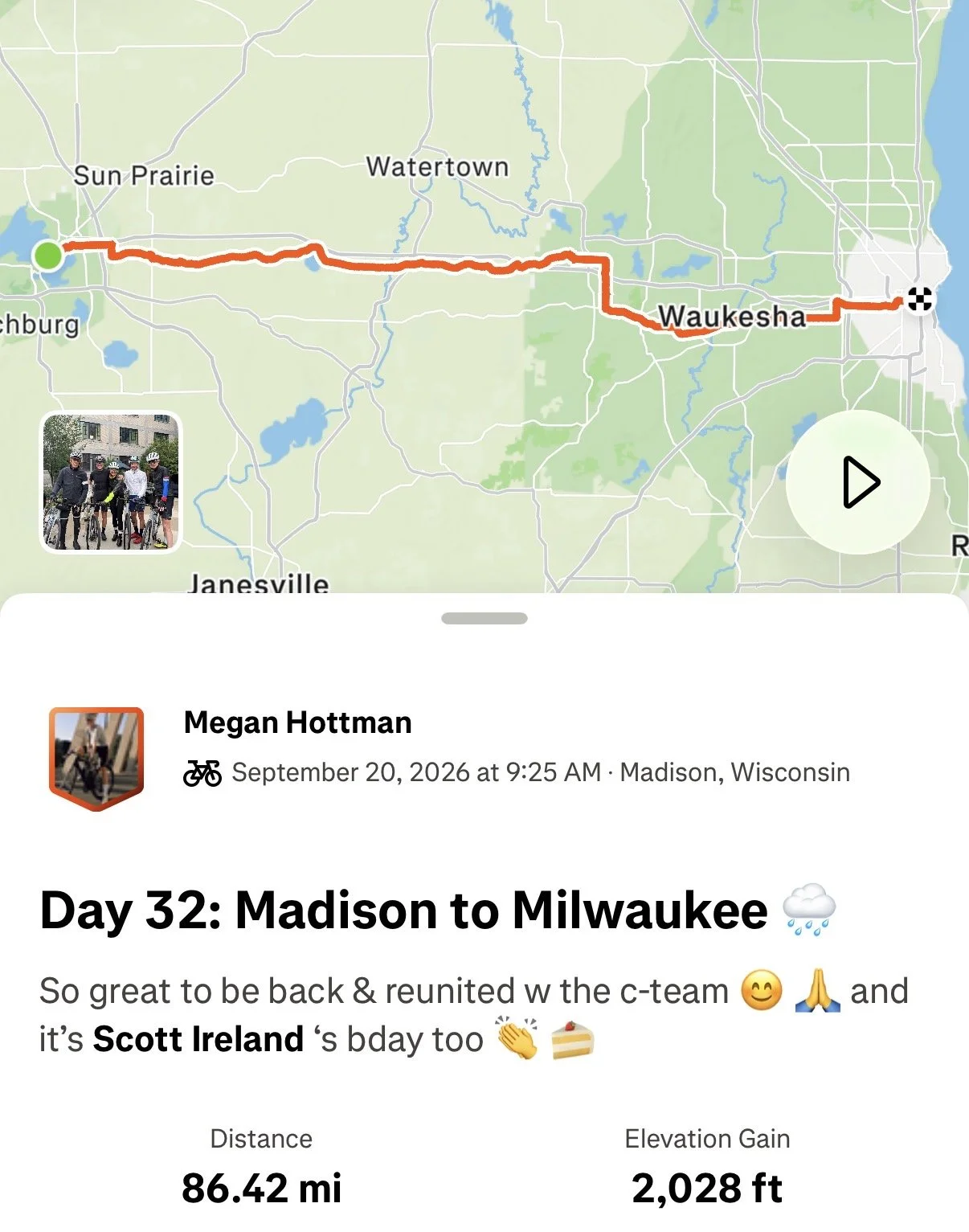
TODAY'S HIGHLIGHTS
Today you'll go from the rather sophisticated city of Madison to the much more industrial and gritty city of Milwaukee, however both are equally charming, and only one recently won the NBA championship
Milwaukee is the largest city in Wisconsin
Milwaukee is now a diverse, bustling metropolis with lots to do, including one of the country's biggest summer music festivals, the Bucks (NBA) and the Brewers (MLB)
It is also well known for its breweries, being home to Miller-Coors as well as PBR.
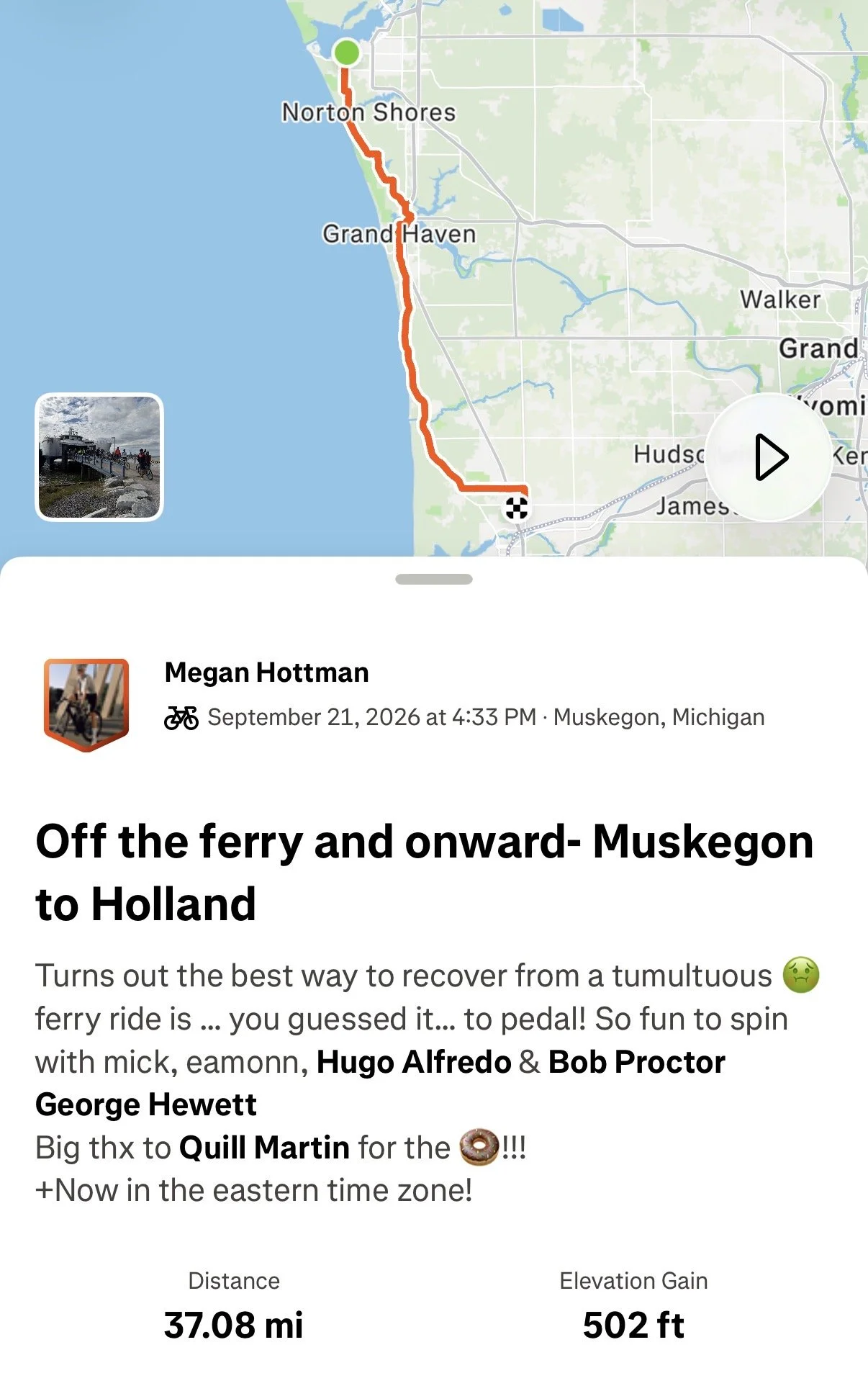
TODAY'S HIGHLIGHTS
Today is a fun day. The Ferry ride is amazing. Take time to relax or catch up on e-mails before heading to the ferry.
Upon arrival on the eastern shore, you will be on Eastern Time and enter the ninth state of your journey: Michigan.
Beautiful ride to Holland before grabbing a late dinner at the hotel and heading to bed.
Holland is known for its Dutch Heritage after being founded in 1847 by Reverend Albertus C. Van Raalte.
Make a note to come back in the Spring for the Tulip Time Festival: this major festival in the spring features parades, Dutch dance performances, and over 5 million blooming tulips throughout the city.
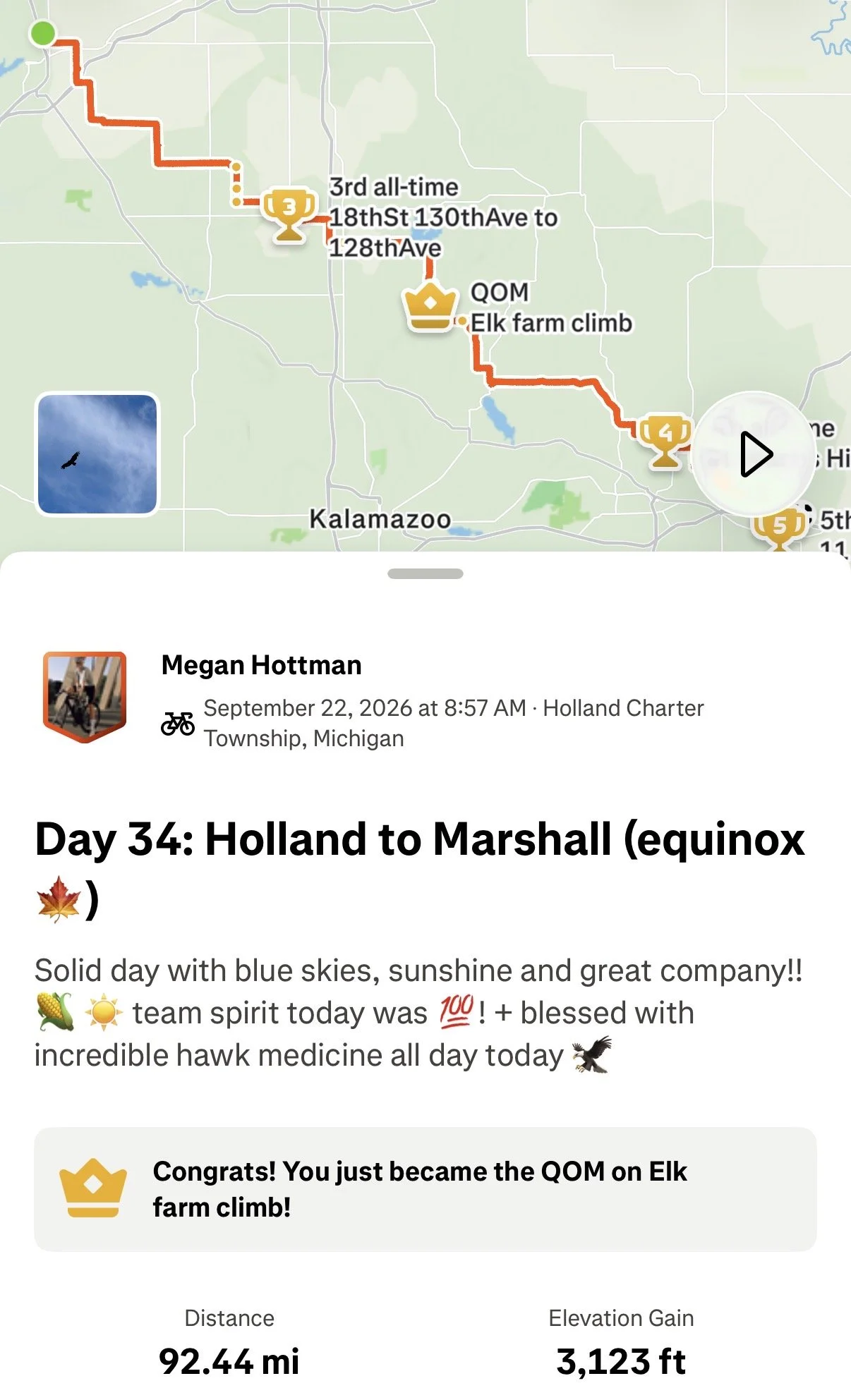
TODAY'S HIGHLIGHTS
Today you will zigzag your way southeast through the open countryside and farms of lower Michigan
Marshall was once a strong contender to become Michigan's state capital, and the Governor's Mansion was built in anticipation of this future. However, Lansing was ultimately chosen by a single vote.
The city is home to one of the nation's largest National Historic Landmark Districts, featuring over 850 historically significant buildings that showcase a cross-section of 19th-century American architecture.
Home to two unique museums: American Museum of Magic and the U.S. Postal Service Museum.
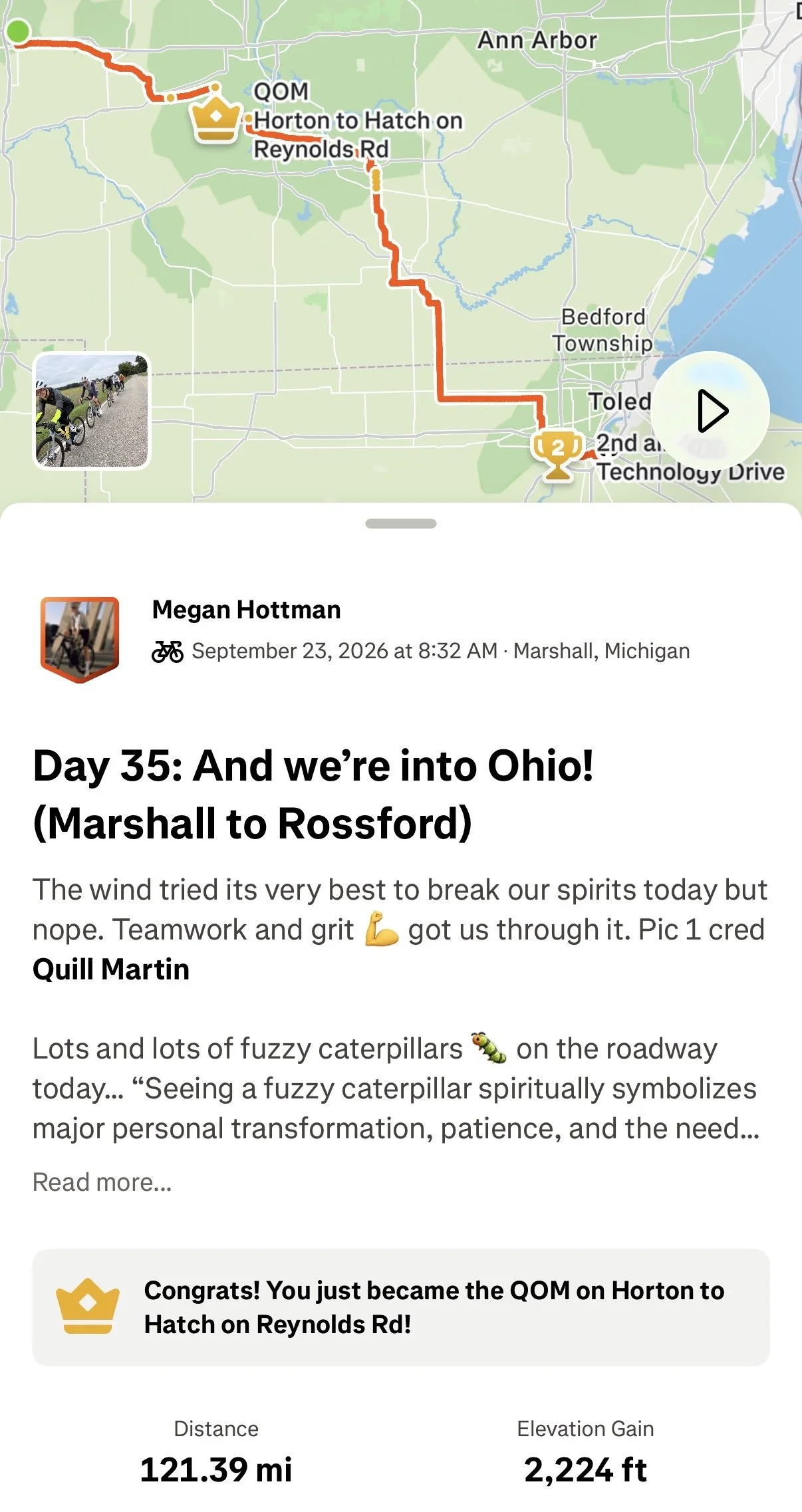
TODAY'S HIGHLIGHTS
Today’s ride will have you pedaling in a variety of settings from quiet farm fields to the suburban community of Rossford.
Plenty of really nice lake neighborhoods on the route today.
Rossford is a small town on the outskirts of Toledo.
TODAY'S HIGHLIGHTS
Today is the last “flat” day of riding on this trip! The majority of our ride is on the North Coast Inland Trail bike path.
Oberlin is the home of Oberlin College, a liberal arts college and music conservatory with approximately 3,000 students.
Oberlin College prides itself on being one of the most environmentally sustainable colleges in the US.
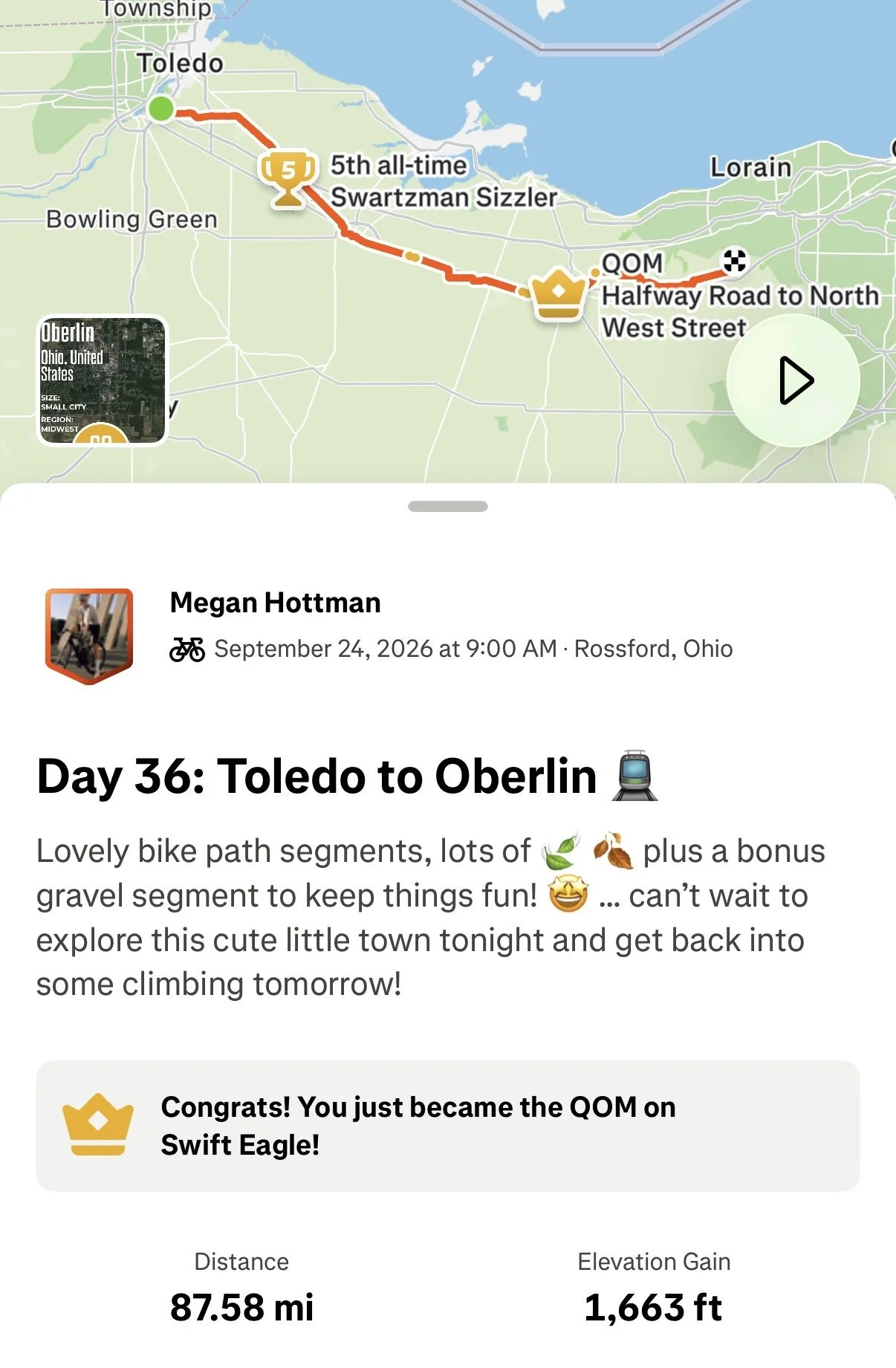
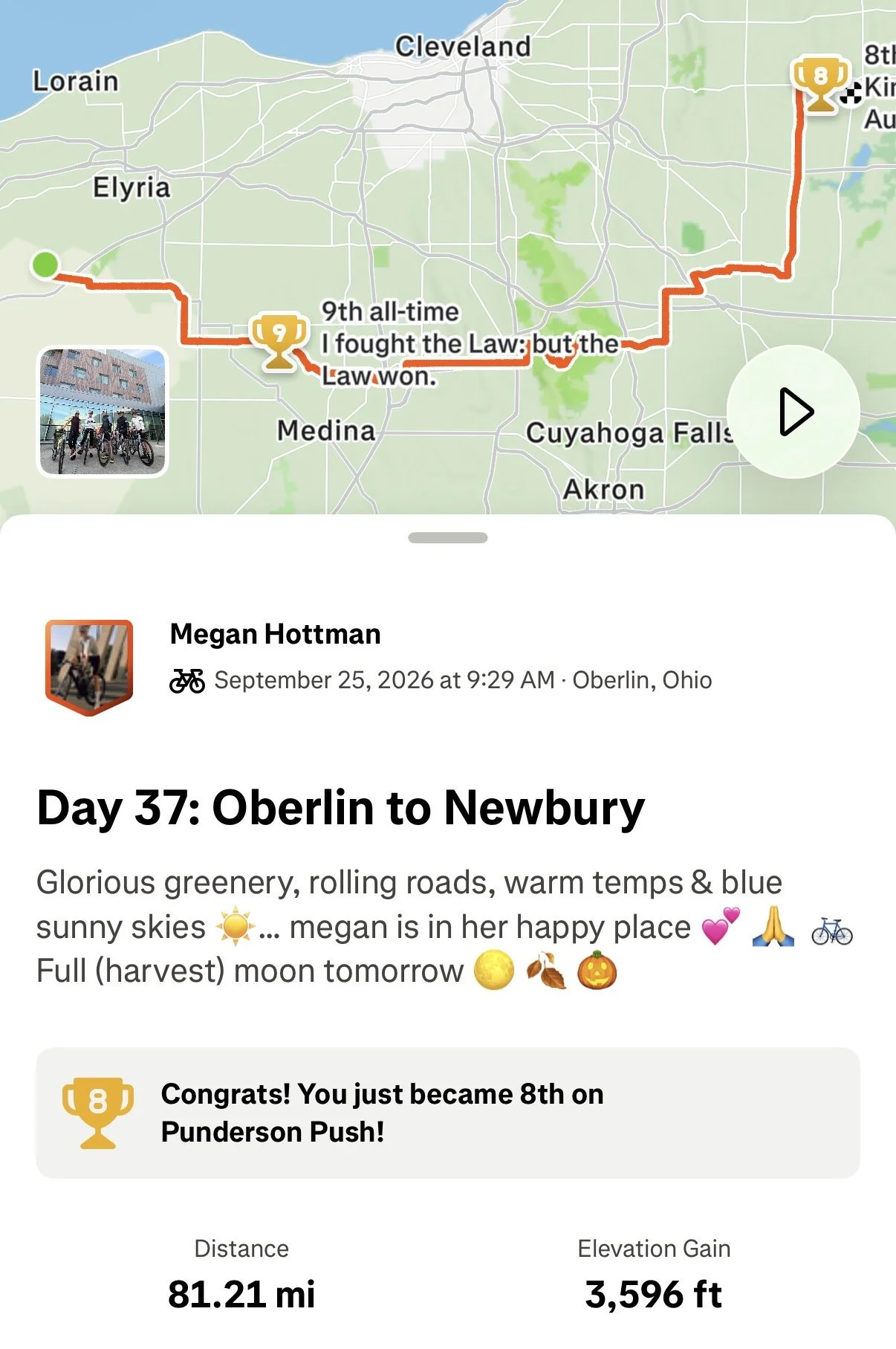
TODAY'S HIGHLIGHTS
The hills gradually pick up today as we pass through acres of farmland before dropping down to the Cuyahoga River and riding through Cuyahoga Valley National Park.
Today's ride ends in Geauga County, home to the world's fourth largest Amish community. We will be sharing the road with horse-drawn buggies!
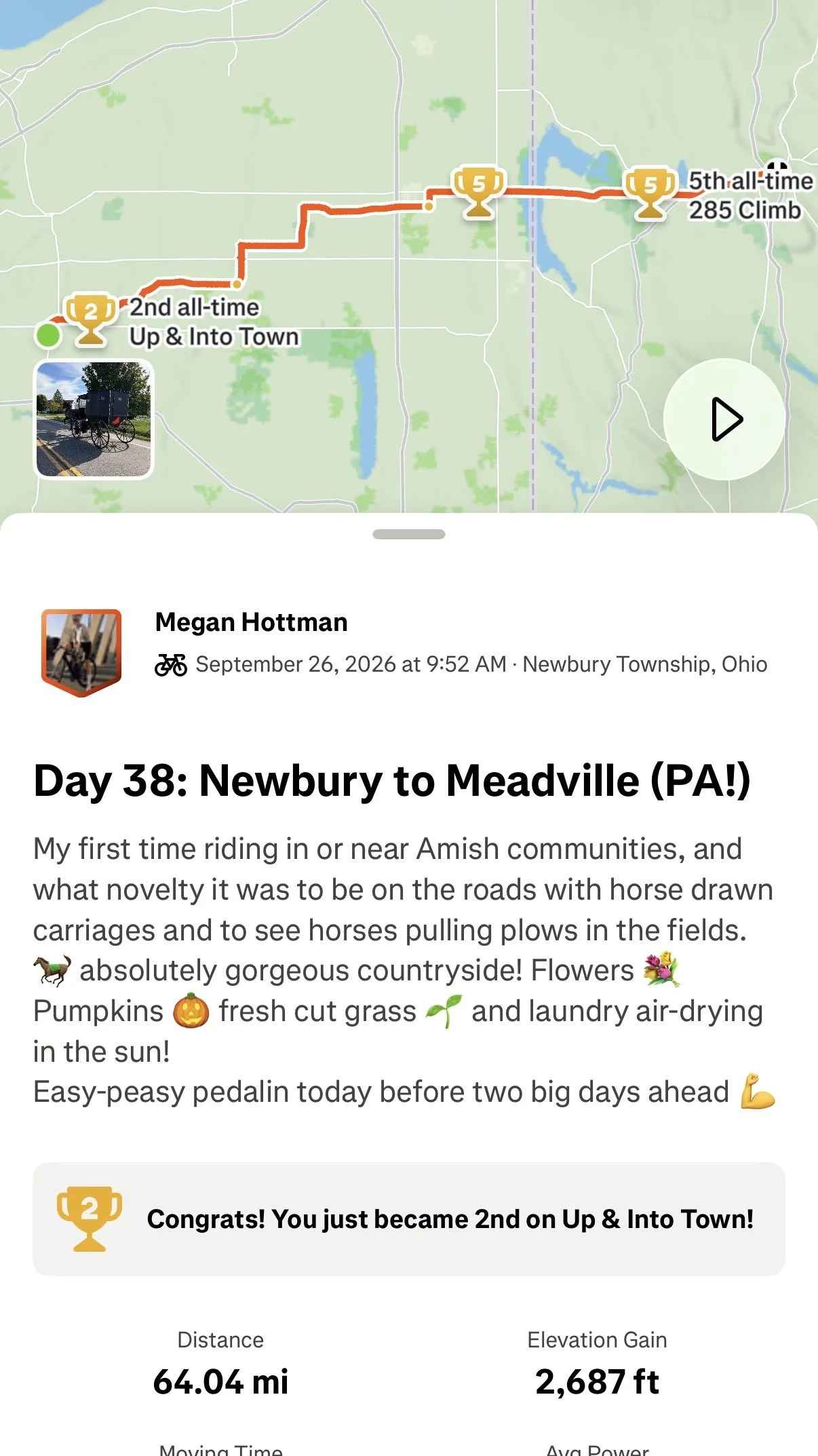
TODAY'S HIGHLIGHTS
Today is a lot rolling terrain today as you cruise through northeastern Ohio on your way to your 11th state of Pennsylvania.
You'll enjoy more horse and buggies are we cruise through Amish country.
Be sure to stop and see the carp at the spillway at Pymatuning Reservoir. The fish are so plentiful, that ducks can walk on their backs. Really a sight to see.
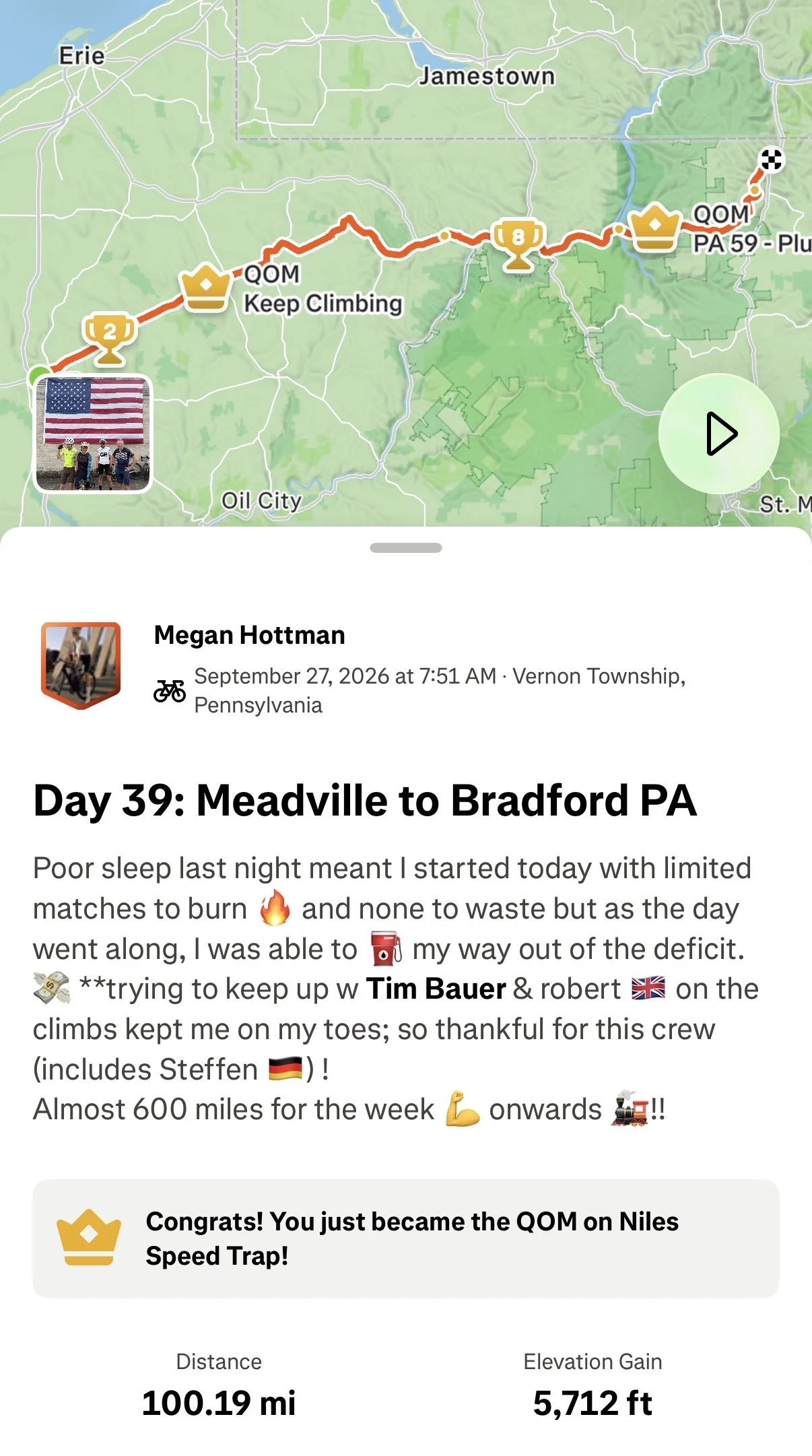
TODAY'S HIGHLIGHTS
Today's ride continues through an area noted for its Amish communities. Amish people are known for valuing simplicity, emphasizing family and community, and for their separation from the modern world including amenities such as electricity.
Today climaxes with a ride along the Allegheny River, past the impressive Kinzua Dam and through the beautiful foliage of the Allegheny National Forest.
Fun Fact: Bradford, PA is the home of Zippo Lighters!
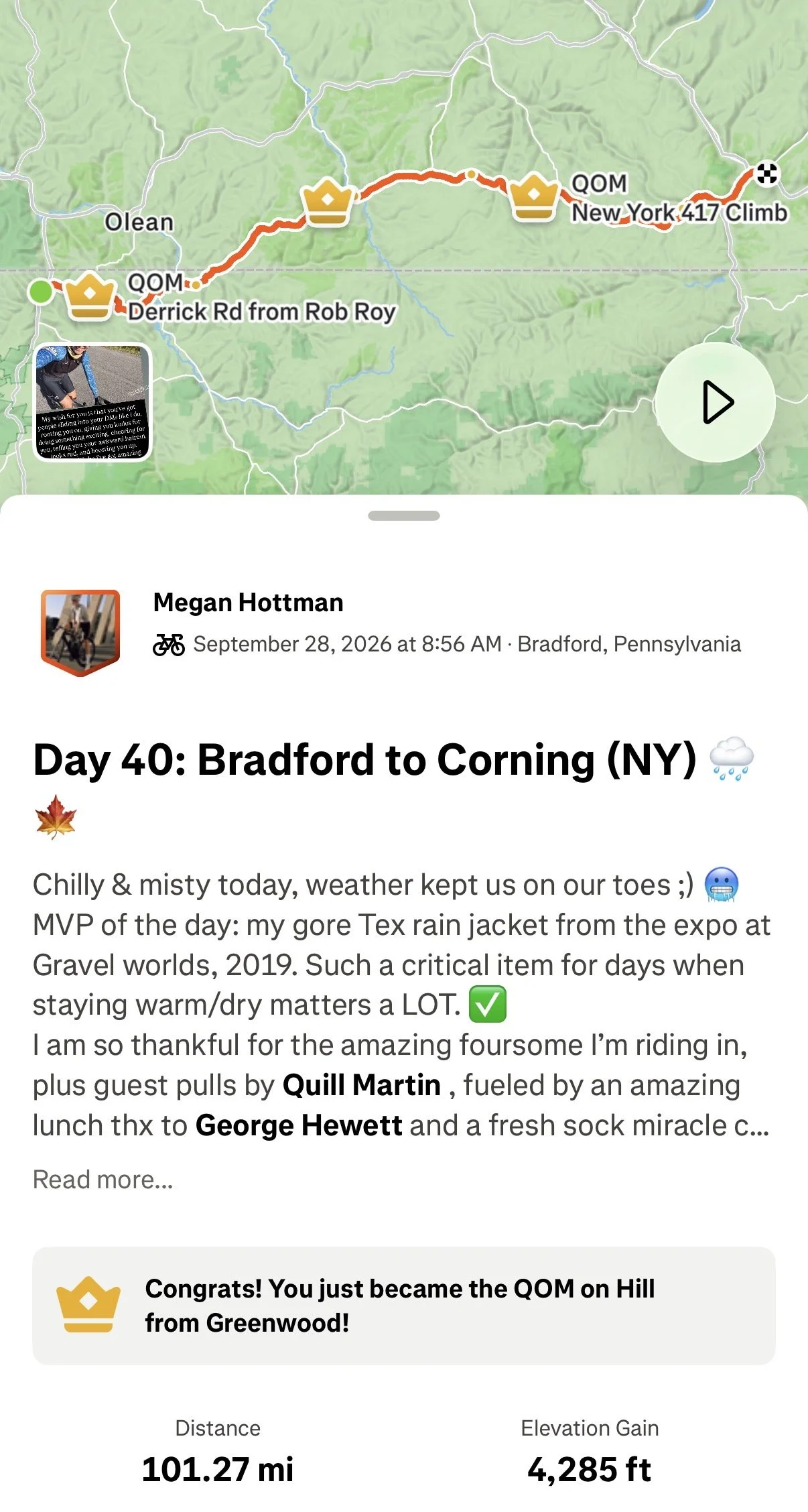
TODAY'S HIGHLIGHTS
Today you'll head out to cross the border into number 12: New York
Corning is known as, "America's Most Fun Small Town" and has long been at the forefront of all things glass.
Corning is where we enjoyed our final rest day. I laid low and just rested and chilled.
DAY 42: TODAY'S HIGHLIGHTS
Today you'll pass through the town of Ithaca, New York, which is home to the Ivy League university of Cornell, as well as the smaller liberal arts college of Ithaca University.
You're riding through a part of New York known as the Finger Lakes region. Trek Travel recently opened a trip in this area!
Enjoy a nice, challenging ride after a lovely day of rest in Corning!
DAY 43: TODAY'S HIGHLIGHTS
Today we are riding through the traditional home lands of the Iroquois people. The Iroquois are a name for six different indigenous groups including the Mohawk, Onondaga, Oneida, Cayuga, Seneca, and Tuscarora people.
these six Indigenous nations banded together in order to increase their power in about 1450.
This league controlled a huge portion of the Northeast and Northern midwest.
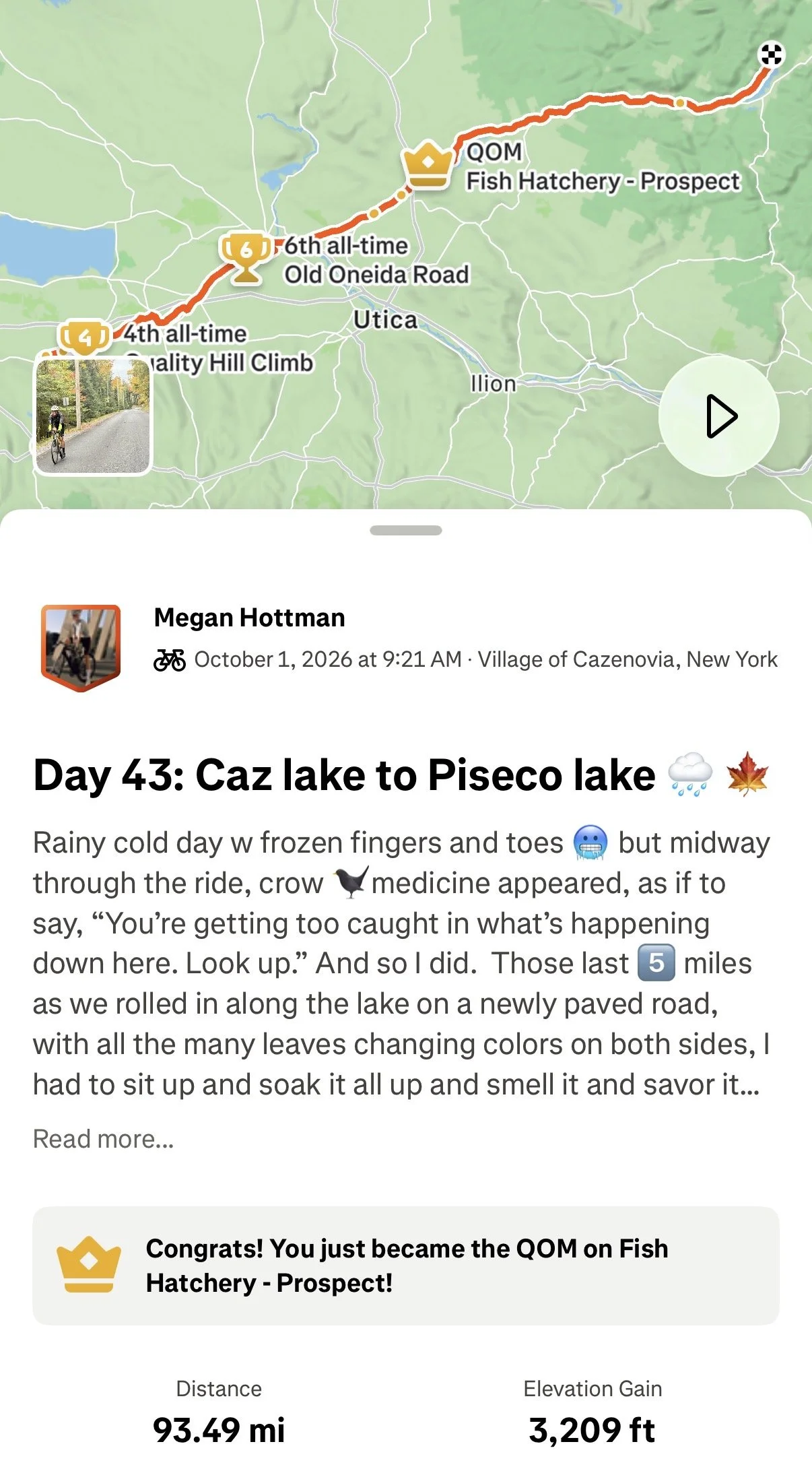
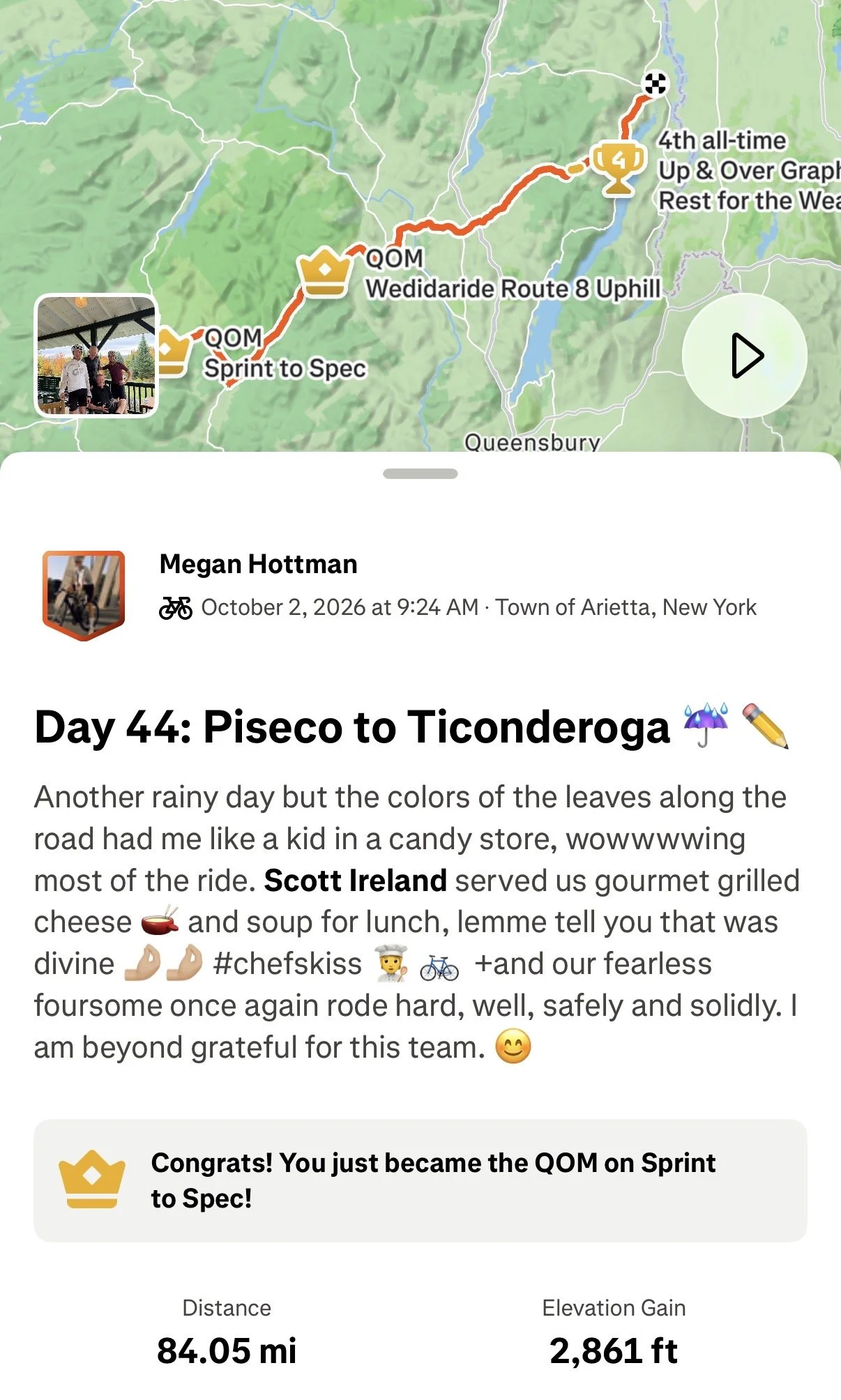
DAY 44: TODAY'S HIGHLIGHTS
Ticonderoga means "the meeting of two waterways" in the Mohawk language, which is relevant because the town is between Lake George and Lake Champlain
Ticonderoga was originally settled by the French, who made a fort here in the 1750's. It would later become strategically important in the French and Indian War, as well as the American Revolutionary War
DAY 45: TODAY'S HIGHLIGHTS
Today we'll end the day just down the road from Hanover which is the home of Dartmouth College
Dartmouth was founded in 1769 and has been considered one of America's best colleges for hundreds of years.
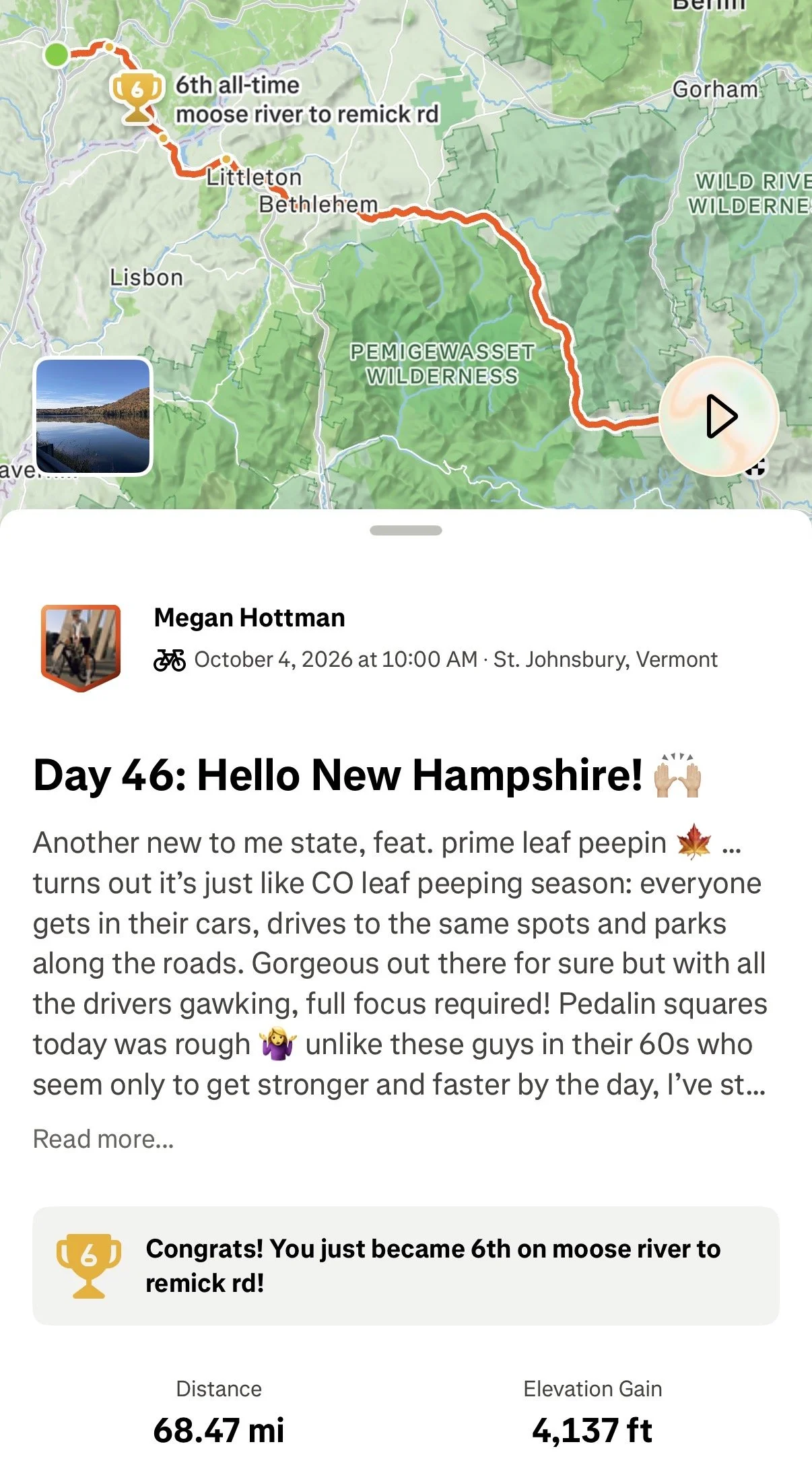
DAY 46: TODAY'S HIGHLIGHTS
Today we'll end the ride in North Conway which is a jumping off point for much of the outdoor recreation of the White Mountains. Many people recreating within the presidential range, which includes Mount Washington begin in North Conway.
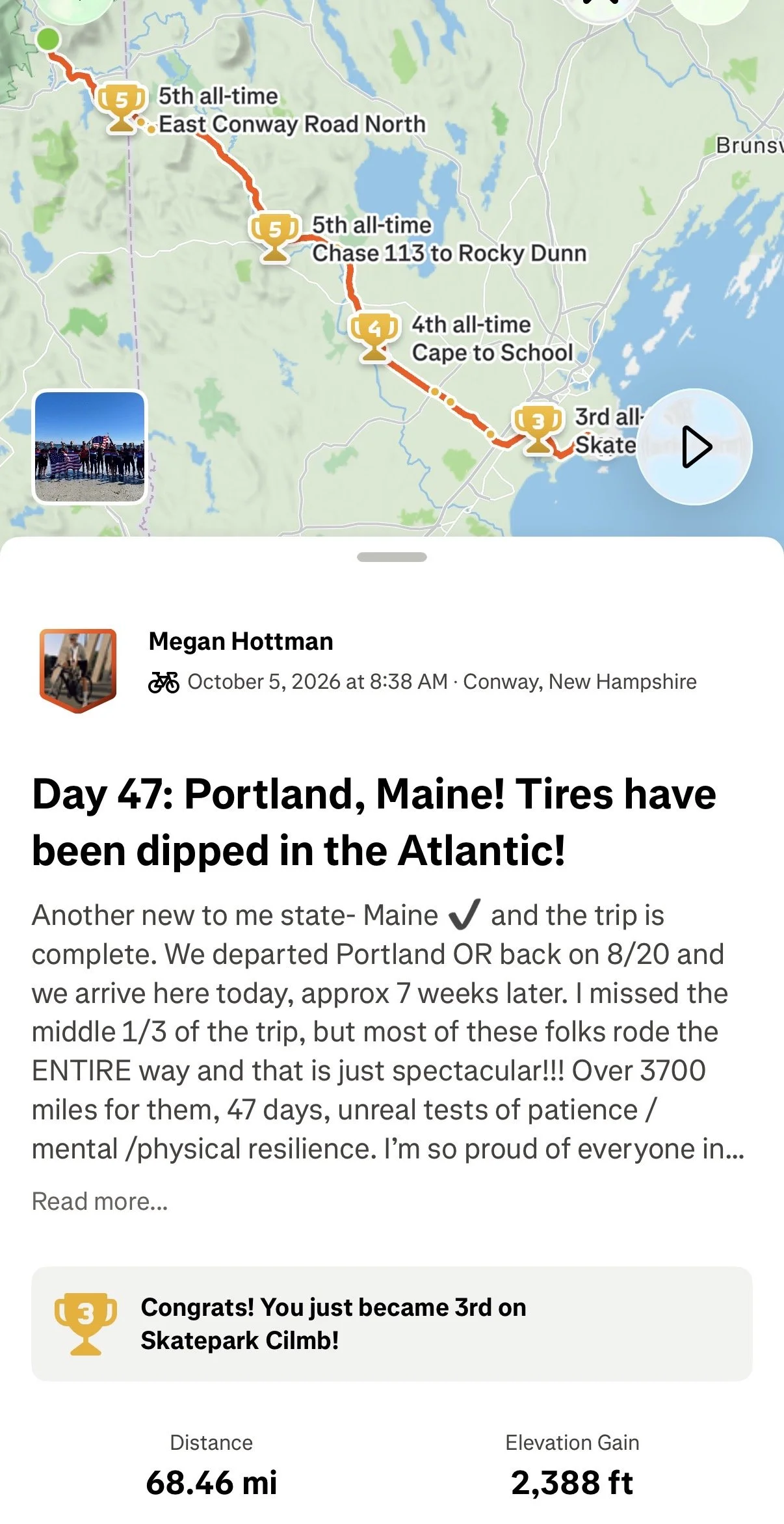
Day 47: TODAY'S HIGHLIGHTS
Last day of the Trip! Wow, well done! What a journey it has been.
Today we will regroup for the last 10 miles as we ride to Crescent Beach.
Tonight we'll sleep in Portland, Maine. An old port town that grew in concert with Boston. It has historically been a ship building hub, a fishing hub, and a military encampment. It is now very hip town with an excellent food scene.
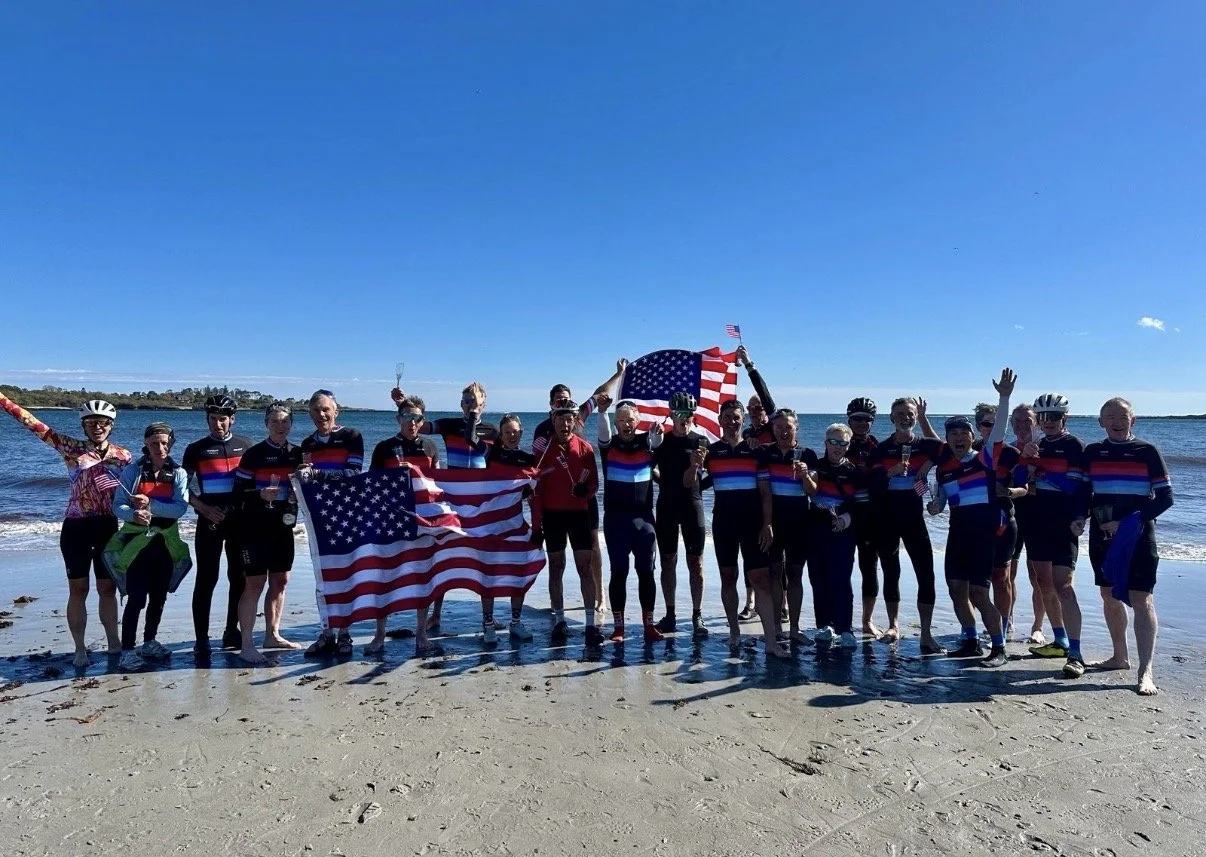
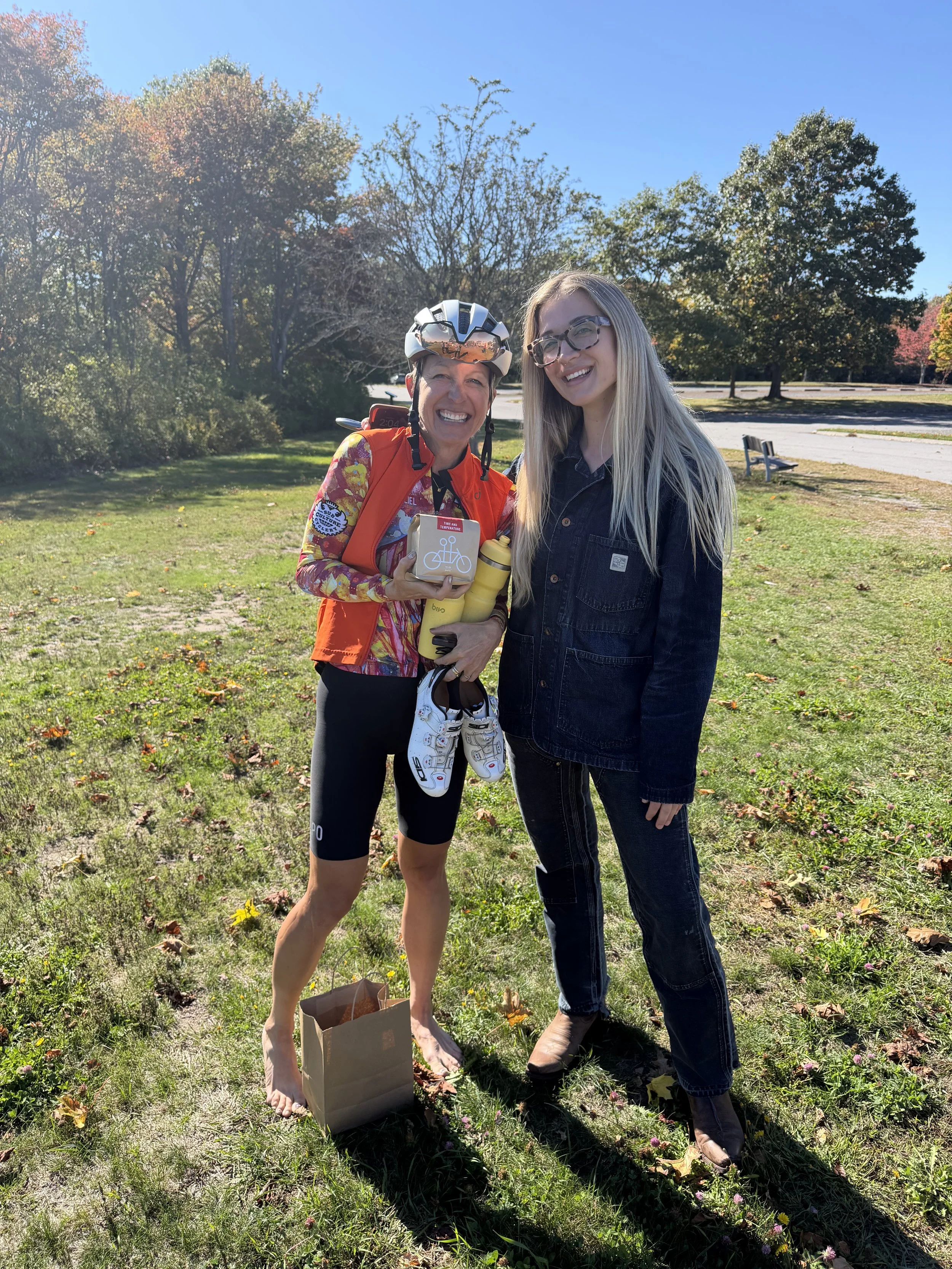
After the ride ended we celebrated with a group dinner and said our farewells. I got the chance to walk around Portland Maine just a little bit before it was time to fly home. What an adventure!!!
““if you want to see the worst in people, scroll social media. If you want to see the best, ride your bike across the country.””